

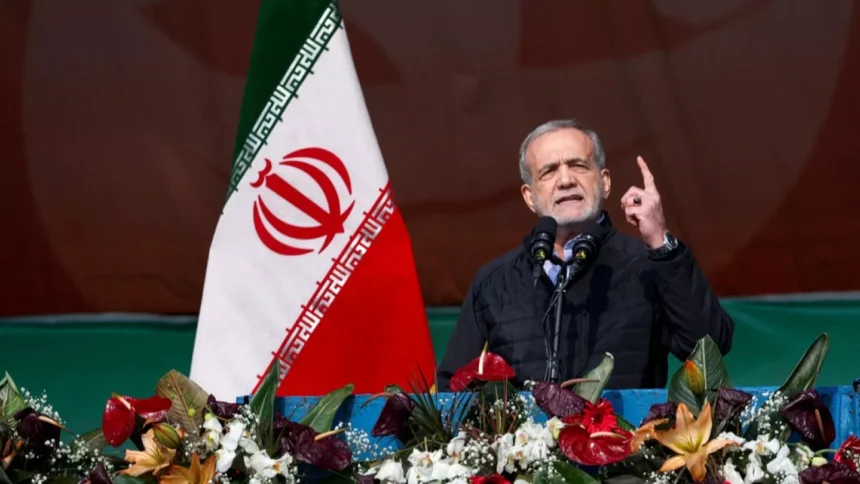
Tehran/Washington: Hours after the conclusion of the latest round of nuclear negotiations between Iran and United States, Iranian President Masoud Pezeshkian said Tehran is pursuing “tangible and concrete outcomes” in talks with Washington.
Addressing a gathering of religious scholars, Pezeshkian clarified that the negotiations are being conducted with the full coordination and approval of Iran’s Supreme Leader Ali Khamenei. He stressed that the objective is to resolve real issues rather than engage in dialogue for the sake of dialogue.
“We are seriously trying to reach a meaningful outcome, and we hope this path will lead to clear and practical results,” the Iranian president said, according to statements published on the official presidential website.
Pezeshkian also reaffirmed that Tehran is prepared to allow verification measures to prove it is not seeking nuclear weapons. “We do not want nuclear weapons at all, and if any party wants to verify this, we are ready to cooperate with any such process,” he added.
Positive Momentum in Talks
Iran’s negotiating team leader and Foreign Minister Abbas Araghchi confirmed that the latest round of talks showed more positive movement than previous sessions.
More Read

Speaking to Iranian state television on Tuesday, Araghchi said the Iranian delegation had reached an understanding with the U.S. on certain fundamental principles. “We now have a clearer path forward in our engagement with the United States,” he noted, while cautioning that this does not mean a final agreement is imminent. “The journey has begun, but there is still work to be done.”
He added that both sides will prepare and exchange two draft versions of a potential agreement, while several unresolved issues still require further technical and political discussions.
Military Tensions in the Background
The diplomatic developments come weeks after heightened military movements by U.S. forces in the region and an exchange of threats between both sides. The latest round followed the first phase of talks held in Muscat on February 6, 2026, which was described by both parties as a positive starting point.

Washington has repeatedly demanded restrictions on Iran’s uranium enrichment activities and has sought to include Iran’s ballistic missile program and regional influence in the negotiations — issues reportedly backed by pressure from Israel.
However, Tehran has consistently maintained that talks with Washington will remain strictly limited to the nuclear file. Iranian officials have reiterated that the missile program is a sovereign national matter and that the right to uranium enrichment is non-negotiable.