

TEHRAN, Iran has firmly rejected US President Donald Trump’s claim that Tehran requested Washington to halt further military strikes, insisting that no such request was ever made. Iranian officials also denied reports that an agreement had been reached to reopen the Strait of Hormuz.
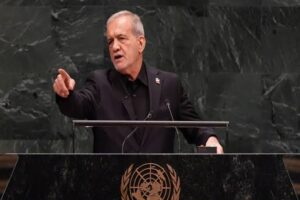
According to Iran’s semi-official Mehr News Agency, unnamed Iranian military officials described President Trump’s remarks as “another lie,” rejecting his assertion that Tehran had sought to prevent additional US military action.
The officials said the Iranian Armed Forces remain on the highest level of military readiness and are fully prepared to respond to any potential developments.
Separately, Iran’s Fars News Agency quoted a source familiar with the country’s negotiating team as dismissing reports that Tehran had accepted a Qatari proposal to restore navigation through the Strait of Hormuz.
The source stressed that no agreement exists regarding the reopening of the strategic waterway, adding that the Strait of Hormuz would remain closed as long as the United States continued what Iran described as its “aggressive actions.”
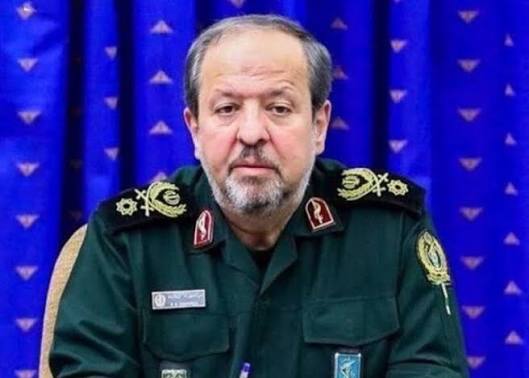
Iran’s state-run Press TV quoted Acting Defense Minister Brigadier General Majid Ibn Reza as saying Tehran viewed recent US threats as part of a psychological warfare campaign, but was treating them seriously.
He said Iran would continue strengthening its defensive capabilities and military preparedness rather than waiting passively for any possible attack.
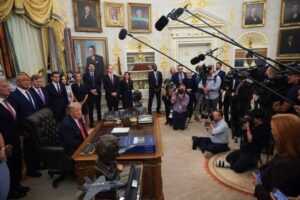
Earlier, President Trump wrote on his Truth Social platform that the United States possessed overwhelming military capability and had decided to postpone further attacks because Middle Eastern allies had agreed on the framework of a possible settlement with Iran.
Trump said the proposed agreement would include:
- The immediate and full reopening of the Strait of Hormuz
- The elimination of what he described as the Iranian nuclear threat
He added that, based on this understanding, he had agreed to cancel the planned military strike on the condition that a final agreement would be reached as quickly as possible.
Trump also claimed that Israel supported the decision, although Israeli officials have not publicly commented on the matter.
The conflicting statements from Washington and Tehran underscore the uncertainty surrounding diplomatic efforts to reduce tensions in the region.
The Strait of Hormuz, through which around 20 percent of the world’s oil and liquefied natural gas shipments passed before the current conflict, remains one of the world’s most strategically important maritime routes. Continued restrictions have disrupted global energy markets and contributed to rising inflationary pressures worldwide.