

By Muhammad Abdullah
The partition of the Indian subcontinent in 1947 remains one of the most tragic chapters in modern history, leaving deep scars that continue to affect millions of families across the region.
In the princely state of Jammu and Kashmir, particularly in areas such as Jammu, Kathua, Samba, Poonch and surrounding regions, large-scale violence and displacement forced thousands of Muslims to flee their ancestral homes. Many lost their lives, while countless others were compelled to abandon their land, property, livestock and livelihoods in order to survive.
Forced Migration and the Pain of Displacement
The writer recalls that his ancestors were among those displaced from the Kathua district’s Hiranagar area. They were once settled landowners with homes, livestock and stable lives, but were forced to migrate under extreme circumstances.
They arrived in what is now Pakistan with the hope that they would eventually return once conditions normalized. However, history took a different turn, and the dream of returning to their homeland remains unfulfilled even today.

Over time, these displaced communities came to be known as “Jammu and Kashmir migrants,” forming a distinct social and political identity within the broader Kashmiri narrative.
Political Recognition and Representation
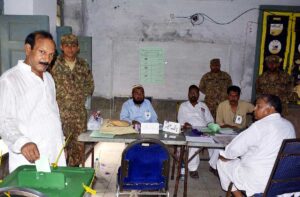
The constitutional and political framework of Azad Jammu and Kashmir acknowledges these migrants through reserved legislative seats, employment quotas and educational opportunities.
This recognition reflects an important historical reality: these individuals were uprooted from their ancestral land and their representation remains tied to that displacement.

The essay highlights that this acknowledgment is not merely administrative, but also an affirmation of identity rooted in history and collective memory.
Debate Over Kashmiri Identity
The article raises concerns about emerging narratives that attempt to redefine or limit Kashmiri identity exclusively to geographic residency in the Kashmir Valley or specific administrative regions.
It questions whether migration or current nationality can erase ancestral ties, cultural heritage and historical belonging.
The writer argues that Kashmiri identity cannot be reduced solely to present-day residence, but must also include lineage, history and ancestral geography.
Identity Beyond Geography
According to the perspective presented, both residents of Azad Kashmir and displaced families originally from Jammu, Kathua, Rajouri and other regions are part of the broader Kashmiri identity.
The argument emphasizes that Kashmir is not merely a territorial label, but a shared historical and cultural inheritance spanning generations.
More Read

It further suggests that displacement does not dissolve identity; rather, it strengthens the moral claim to that identity due to the sacrifices endured.
Call for Unity and Responsible Discourse
The essay also cautions against narratives that may create division or hostility, particularly those that could strain relationships between communities or state institutions.
It stresses that constructive engagement, constitutional struggle and dialogue are more effective pathways for addressing grievances than confrontation or polarization.
The writer reiterates that many migrant communities continue to seek protection of their rights and identity while remaining aligned with national institutions and constitutional frameworks.
Conclusion: Identity Rooted in History and Memory
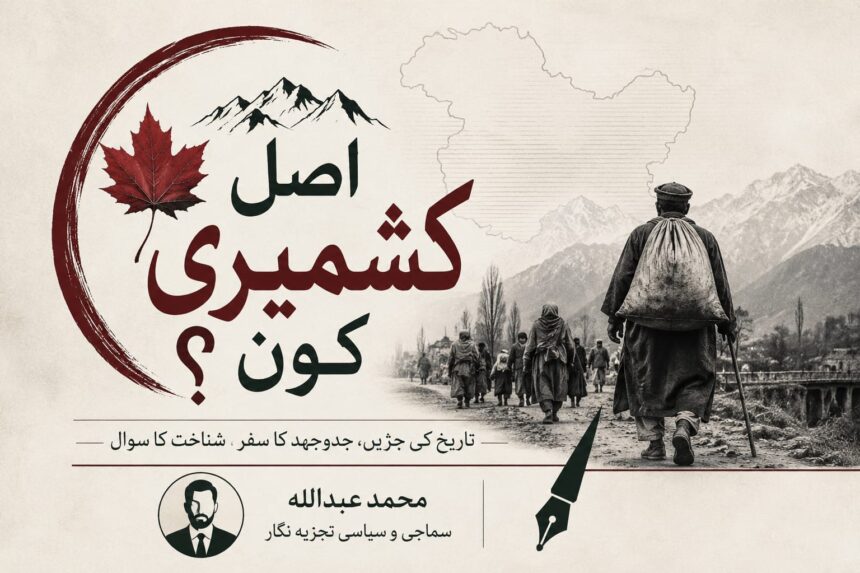
Ultimately, the essay argues that the question “Who is the real Kashmiri?” cannot be answered solely through geography.
Instead, it proposes that true Kashmiri identity is defined by historical connection, ancestral roots and collective memory of sacrifice.
Whether residing in Muzaffarabad, Mirpur, or elsewhere in Pakistan and the world, the essence of Kashmiri identity remains tied to a shared past and enduring sense of belonging.