

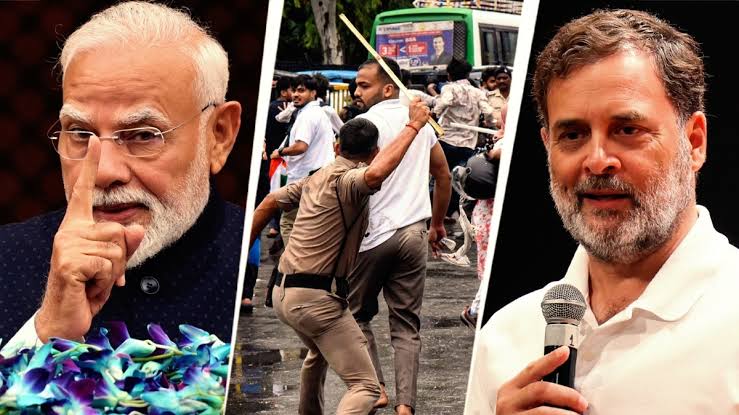
NEW DELHI: Protests led by India’s youth-focused Cockroach Janata Party (CJP) continued on Wednesday despite Prime Minister Narendra Modi announcing the establishment of special fast-track courts to expedite legal action against those involved in recent examination paper leak scandals.
The Prime Minister’s decision comes after weeks of nationwide demonstrations by students and youth groups demanding accountability over repeated exam paper leaks, allegations of corruption in the education system, and growing unemployment.
However, CJP spokesperson Ashutosh Ranka dismissed Modi’s response as inadequate, arguing that the government acted only after nearly six weeks of sustained protests.
“It is encouraging that the Prime Minister has finally taken notice after one and a half months of demonstrations, but the real question is why these paper leaks continue to happen,” Ranka said.
He alleged that the problem stems from incompetence and corruption within the education administration, claiming that officials, including Education Minister Dharmendra Pradhan, had failed to protect the integrity of the examination system.
More Read
Ranka declared that protesters would continue their sit-in until the education minister resigns, insisting that the newly announced judicial measures alone would not resolve the underlying issues.
Meanwhile, India’s main opposition Congress Party accused Prime Minister Modi of damaging the country’s education system and undermining the future of young people. Party leaders argued that the demands of protesting students were justified and reiterated their call for Education Minister Dharmendra Pradhan to step down.
Speaking to the media in New Delhi, Cockroach Janata Party founder Abhijeet Deepke alleged that individuals linked to the ruling Bharatiya Janata Party (BJP) were being sent to disrupt the peaceful demonstrations and tarnish the movement’s image.
More Read

Deepke claimed that the month-long protest had remained peaceful and accused authorities of allowing violence near protest sites to discredit demonstrators.
He further alleged that trucks carrying stones were brought near demonstration areas and that individuals associated with the ruling party later used them to provoke unrest.
“The movement is being deliberately defamed,” Deepke said, adding that if the government was willing to hold dialogue, protesters were also ready for negotiations at the demonstration site.
The protests have become one of the most significant youth movements in India in recent months, with demonstrators demanding transparency in recruitment examinations, stronger safeguards against paper leaks, and greater accountability within the country’s education system.