

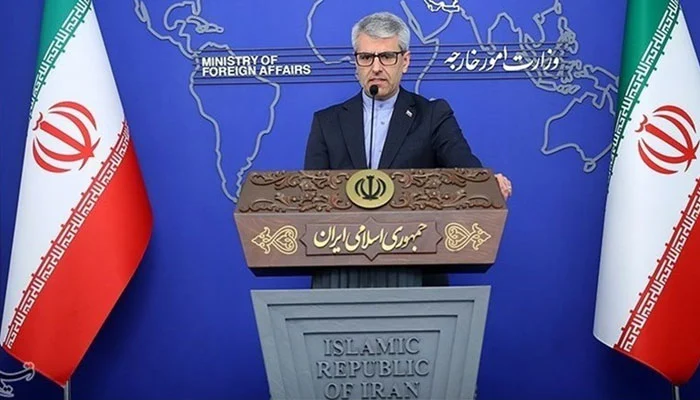
Iran has rejected the term “Iranian conflict” to describe the war involving the country. Foreign Ministry spokesperson Esmail Baghaei criticised the wording used by some governments.
On Thursday evening, Baghaei responded to a joint statement by Qatari and French officials. He shared his comments on the social media platform X.
“Please do not try to hide the truth behind misleading interpretations,” Baghaei wrote.
He described the situation as an “aggressive war against Iran” led by the United States and Israel. These remarks reflect Tehran’s position on the conflict.
Baghaei Criticises Diplomatic Language
Baghaei argued that calling the situation an “Iranian conflict” misrepresents the facts. He said such wording could obscure responsibility for the war.
More Read
The Iranian spokesperson also challenged claims of neutrality. In his view, refusing to identify aggression by name amounts to avoiding moral responsibility.
He questioned how countries could oppose injustice without identifying those responsible. He also asked how they could offer practical solutions under such circumstances.
Iran Says Peace Requires Principles
Baghaei said peace cannot be achieved by appeasing those accused of aggression. He also opposed legitimising aggression or blaming its victims.
More Read
“Peace cannot be built by appeasing aggressors,” he stated.
He added that peace efforts should not require countries to abandon fundamental principles. His comments stressed the importance of accountability in international relations.
Dispute Over the Description of the War
The disagreement highlights the role of diplomatic language during international crises. Governments often use different terms to describe the same events.
Tehran objects to the phrase “Iranian conflict.” It argues that the wording fails to identify what Iran considers an act of aggression.
Baghaei urged other parties to describe the situation more accurately. He said clear language was essential to addressing injustice and supporting peace.
His remarks reflect Iran’s position on the conflict. The competing claims and legal characterisation of the war require independent assessment.