


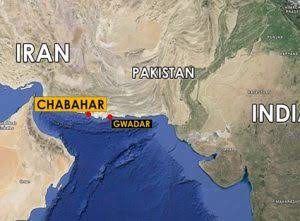
Iran’s Islamic Revolutionary Guard Corps (IRGC) has announced plans for a new restricted maritime zone extending from Chabahar into parts of the Gulf of Oman and the Arabian Sea.
The IRGC said the exact coordinates of the zone will be announced later. The move comes as tensions between Iran and the United States continue to rise across the region.
Ships Could Face Restrictions
IRGC spokesperson Hossein Mohebi said vessels entering the restricted area without coordination with Iran would face sanctions.
The restrictions could affect maritime, insurance and related services. Iranian officials have also warned that vessels entering the zone could face further restrictions when attempting to transit the Strait of Hormuz.
However, Iran has not yet published the exact boundaries of the proposed zone.

Zone Would Extend Beyond Hormuz
The announcement marks a possible expansion of Iran’s maritime restrictions beyond the Strait of Hormuz.
On Sunday, Iranian official Mohsen Rezaei said Tehran would establish a restricted maritime zone outside the strait within days.
The IRGC announcement now indicates that the zone could reach eastward toward Chabahar and parts of the Gulf of Oman and Arabian Sea.

Chabahar Has Strategic Importance
Chabahar is a major Iranian port on the Gulf of Oman. It gives Iran direct access to the Indian Ocean.
The port also lies close to Pakistan and sits outside the Strait of Hormuz. Therefore, any restrictions extending from Chabahar toward the Arabian Sea could have wider implications for regional shipping.
Shipping Risks Increase
The announcement comes as commercial shipping through the Strait of Hormuz has already fallen sharply.
Reuters reported that only six commodity vessels passed through the strait on Tuesday. That figure remained well below the recent 10-day average of 12 vessels.
Meanwhile, Iran and the United States have exchanged attacks involving warships and commercial vessels. Iran has claimed attacks on 10 ships, while the United States has destroyed five Iranian oil tankers, according to the latest reports.
Global Energy Markets Face More Pressure
The growing maritime tensions have also affected global energy markets.

Brent crude prices moved above $100 a barrel on Wednesday for the first time since July, as traders assessed the risk of prolonged disruption to oil shipments through the region.
A wider maritime restriction around the Gulf of Oman and Arabian Sea could therefore add further pressure to commercial shipping and energy supplies.