

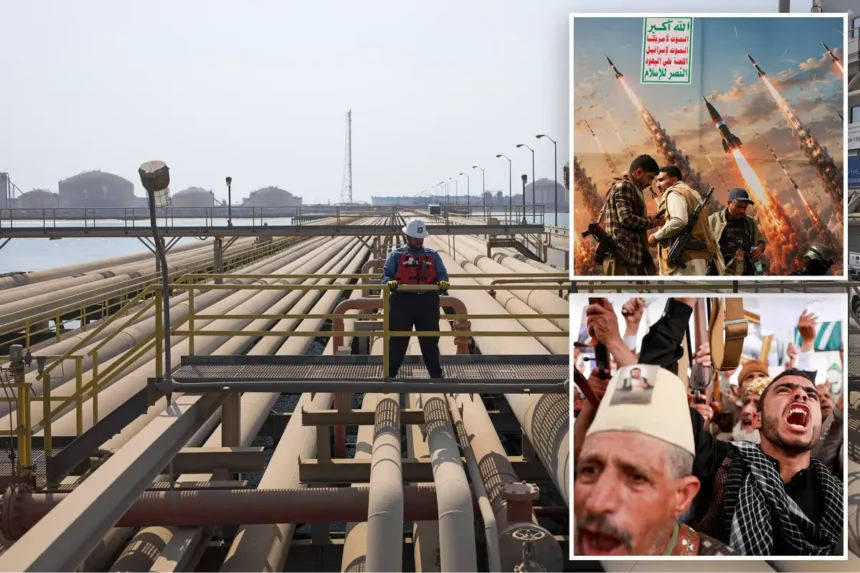
ADEN/DUBAI, — Saudi Arabia has temporarily shut its vital East-West oil pipeline after an aerial attack damaged the facility. The move adds fresh pressure to global energy supplies as Houthi forces tighten their grip on key Red Sea shipping routes.
The 1,200-kilometre pipeline crosses Saudi Arabia from the Gulf coast to the Red Sea. It allows the kingdom to move crude without relying on the Strait of Hormuz.
The Saudi Energy Ministry said it closed the pipeline as a precaution. The line had carried about 4 million to 5 million barrels of oil per day in recent months, according to shipping trackers and analysts. That equals roughly 4% to 5% of global oil supply.
Pipeline Hit in Riyadh and Medina
The attacks struck sections of the pipeline in the Riyadh and Medina regions on Thursday, Saudi officials said. Some people suffered injuries and received medical treatment.
Saudi officials said drones launched from Iraq carried out the attack. However, they have not publicly identified the group responsible.

Satellite images showed black smoke rising from an area south of Medina. Saudi authorities said they were assessing the damage and its impact on oil exports.
Saudi Arabia has so far avoided military retaliation. Riyadh said it respected a request from the Iraqi prime minister. At the same time, Saudi officials warned that the kingdom reserves the right to take measures to protect its security and critical infrastructure.
Houthis Tighten Grip on Red Sea Route
The pipeline attack came as Yemen’s Iran-aligned Houthi movement expanded its control along the Red Sea coast.

Four Yemeni government sources told Reuters that Houthi forces seized Perim Island on Friday. The island sits at the entrance to the Bab el-Mandeb Strait, one of the world’s key maritime chokepoints.
Houthi forces have also reached the nearby mainland town of Dhubab. Their advance has raised concerns about the security of ships moving between the Red Sea and the Gulf of Aden.
The Houthis have said maritime traffic remains safe for most ships. However, their military spokesman Yahya Saree said Saudi vessels remain subject to a previously announced ban.
Oil Markets Face Fresh Pressure
The developments have created a new risk for global energy markets.
The Strait of Hormuz has already faced severe disruption during the US-Iran war. The East-West pipeline had offered Saudi Arabia an alternative route for crude exports.
Now, attacks on the pipeline and growing Houthi control near Bab el-Mandeb are putting pressure on both major routes around the Arabian Peninsula. Oil prices have moved above $100 a barrel amid the supply concerns.
The International Energy Agency also reported that Saudi crude supply had fallen to its lowest level in more than three decades. Attacks on shipping through Bab el-Mandeb contributed to the decline, according to the agency.
Saudi Arabia Seeks US Military Support
Saudi Crown Prince Mohammed bin Salman has asked US President Donald Trump for military help against the Houthis, according to sources cited by Reuters.
Washington has so far declined to launch direct military action. Instead, US officials have offered intelligence sharing and support for targeting, the sources said.
Meanwhile, Yemen’s Saudi-backed government has indicated that its forces intend to retake territory captured by the Houthis.
The developments could further widen the regional conflict. They also raise concerns about disruptions to two major energy and shipping corridors: the Strait of Hormuz and Bab el-Mandeb.
Iraq Takes Security Measures
Iraq has also taken steps following the pipeline attack.
The Iraqi government dismissed a military commander who had led operations in Maysan province. The province borders Iran and has long been an area of strong influence for Iran-backed Shi’ite militias.
Iraq also ordered the closure of the Shalamcheh border crossing with Iran as a precaution. Security sources said authorities had launched a broad operation to identify those behind the drone attack.
For now, Saudi Arabia has avoided direct retaliation. However, Riyadh has warned that it will protect its territory, sovereignty and vital energy infrastructure.