

ISLAMABAD — Pakistan’s federal cabinet has approved a unanimous resolution describing the country’s joint defense agreement with Saudi Arabia and Türkiye as a major diplomatic and security development.
The cabinet praised Prime Minister Shehbaz Sharif, Deputy Prime Minister and Foreign Minister Ishaq Dar, and Chief of Army Staff and Chief of Defense Forces Field Marshal Syed Asim Munir.
The ministers recognized their leadership and efforts to strengthen Pakistan’s international standing and protect national interests.
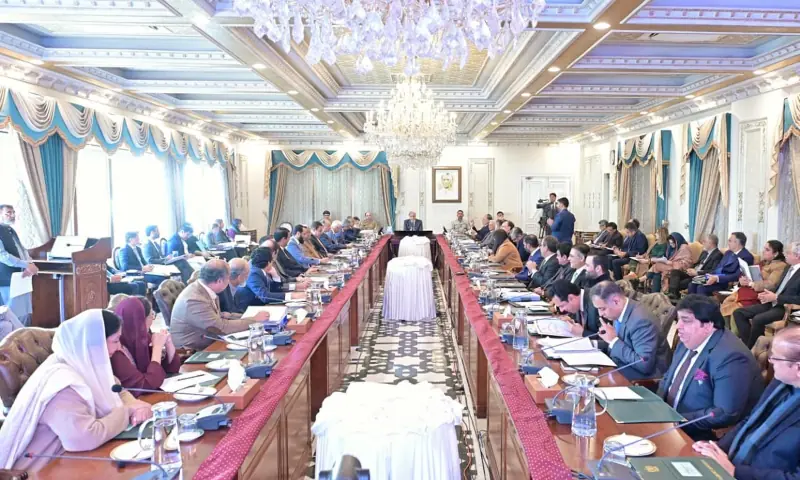
Prime Minister Shehbaz Sharif chaired the cabinet meeting in Islamabad on Monday.
Cabinet Praises Saudi-Türkiye Defense Agreement
At the start of the meeting, the cabinet unanimously approved the resolution.

The ministers described the Pakistan-Saudi Arabia-Türkiye defense agreement as an important diplomatic and defense milestone.
The resolution said the agreement would also strengthen unity and cooperation among Muslim countries.
The cabinet praised the leadership involved in advancing Pakistan’s strategic partnerships.
More Read

Cabinet Approves National Housing Policy 2026
The federal cabinet also approved the National Housing Policy 2026 and its implementation action plan.
Officials told the cabinet that a working group of national and international experts prepared the policy.
The group also consulted federal ministries, provincial governments and development partners during the drafting process.
The policy aims to provide sustainable, safe and quality housing for all citizens.
The cabinet directed authorities to ensure full compliance with zoning regulations in housing projects.
It also called for greater use of vertical housing to improve land use.
More Read

Energy Efficiency Included in Housing Policy
The cabinet directed authorities to make energy-efficiency codes an essential part of the National Housing Policy.
The move aims to ensure that new construction meets energy-efficient and environmentally friendly standards.
Officials also briefed the cabinet on progress under Prime Minister Shehbaz Sharif’s Apna Ghar Scheme.
According to the briefing, banks have approved loans worth Rs220 billion for people seeking to build or own homes.
Banks have already disbursed more than Rs32 billion to successful applicants.
Pakistan Withdraws Sweden Investment Treaty Termination Notice
The cabinet approved a Board of Investment proposal concerning Pakistan’s bilateral investment treaty with Sweden.
The ministers approved the withdrawal of Pakistan’s notice to terminate the investment agreement signed by the two countries in 1981.
The decision aims to maintain the existing investment framework between Pakistan and Sweden.
Cabinet Approves Pakistan Information Security Framework 2026
The Ministry of Information Technology presented the draft Pakistan Information Security Framework 2026 (PISF 2026).
Officials said the framework follows the CERT Rules 2023.
It aims to establish unified and comprehensive information security standards across Pakistan.
The framework will also strengthen centralized oversight of information security.
The cabinet approved PISF 2026 and described it as an important guiding document for Pakistan’s cybersecurity efforts.
It directed the relevant authorities to implement the framework effectively within the prescribed timeframe.
Cabinet Endorses Oil Refinery Policy Changes
The cabinet also endorsed decisions from the Cabinet Committee on Energy meeting held on July 28.
The decision includes proposed amendments to the Pakistan Oil Refining Policy 2023.
The amendments aim to support the modernization and upgrading of domestic oil refineries.
The government wants the upgrades to help Pakistan meet its energy needs more effectively.
Economic and Legislative Decisions Ratified
The federal cabinet also ratified decisions from meetings of the Economic Coordination Committee held on July 27 and August 4.
The cabinet further endorsed decisions taken by the Cabinet Committee on Legislation during its July 24 meeting.
The decisions cover economic, energy and legislative matters.
The cabinet’s latest meeting therefore addressed a broad range of national priorities, including defense cooperation, housing, investment, cybersecurity and energy security.