

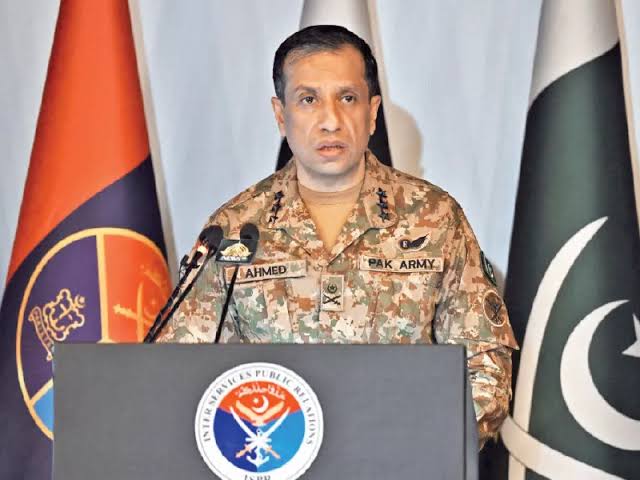
ISLAMABAD, Director General of Inter-Services Public Relations (ISPR), Lieutenant General Ahmed Sharif Chaudhry, said on Friday that Pakistan has no room for negotiations with terrorists, stressing that militants must either surrender or face military action.
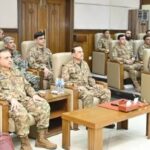
Addressing a comprehensive security briefing, the military spokesperson said Pakistan’s security forces remain committed to eliminating terrorism while emphasizing that effective governance and administrative reforms are essential for ensuring long-term national stability.
No Negotiations with Terrorists
Lt Gen Ahmed Sharif Chaudhry stated that terrorists would not be granted concessions.
“There is no room for negotiations with terrorists. They must surrender their weapons or they will be eliminated.”
Responding to a question regarding recent remarks by Interior Minister Mohsin Naqvi, the DG ISPR said those comments reflected the minister’s personal opinion and declined to comment further.
Over 40,000 Counterterrorism Operations Conducted
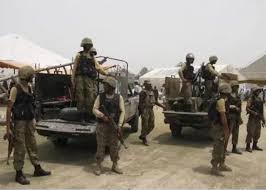
The military spokesperson said security forces carried out 40,348 counterterrorism operations across Pakistan during the reporting period.

According to the figures presented:
- 40,348 security operations conducted nationwide.
- 819 security personnel embraced martyrdom.
- 2,084 militants were killed.
- 31,080 operations were carried out in Balochistan.
- 7,177 operations were conducted in Khyber Pakhtunkhwa.
- 2,091 operations took place in other parts of Pakistan.
He added that 28 bomb blasts occurred during 2026, alleging that many of those incidents involved Afghan nationals.
Concerns Over Balochistan Security
Lt Gen Chaudhry accused militant groups of attempting to destabilize Balochistan and alleged that anti-state elements were engaged in systematic propaganda against Pakistan.
More Read
He maintained that Pakistan’s Constitution and laws apply equally to all citizens and emphasized that loyalty to the state is a constitutional obligation.
The DG ISPR also alleged that militant organizations were receiving external support and claimed that certain tribal leaders were directly involved in facilitating terrorism and smuggling activities.
He said development projects, including highways, water infrastructure, healthcare, and education initiatives, were underway across Balochistan to improve the quality of life for local residents.
Governance and Administrative Reforms Needed
The military spokesperson argued that Pakistan’s governance structure must evolve to match demographic growth.
He noted that Pakistan’s population has increased nearly fourfold while the administrative framework has remained largely unchanged.
According to Lt Gen Chaudhry, improving governance remains critical to addressing many of the country’s long-term challenges.
He also observed that 13 of the 14 points of the National Action Plan relate directly to governance issues, stressing that stronger implementation is necessary.
Allegations Against Afghan Taliban and India
During the briefing, Lt Gen Chaudhry accused the Afghan Taliban administration of supporting militant groups operating against Pakistan and alleged that India was backing anti-Pakistan terrorist organizations.
He further claimed that cross-border terrorism, weapons trafficking, narcotics smuggling, and militant financing remain significant security concerns.
Kashmir and National Security
Reiterating Pakistan’s longstanding position on Kashmir, the DG ISPR said the territory remains central to Pakistan’s national policy and asserted that the country would continue extending political and diplomatic support to the Kashmiri people.
He also reaffirmed Pakistan’s close strategic relationship with Saudi Arabia, describing it as a special partnership.
Commitment to Counterterrorism
Concluding the briefing, Lt Gen Ahmed Sharif Chaudhry said Pakistan’s security forces would continue operations until terrorism is completely eradicated.
He stressed that national security, constitutional order, and effective governance remain essential pillars for ensuring peace and stability across the country.