

ISLAMABAD, Pakistan has strongly condemned India’s use of pellet guns in Indian Illegally Occupied Jammu and Kashmir (IIOJK) and other parts of India, describing the practice as unacceptable and calling attention to documented international human rights concerns.
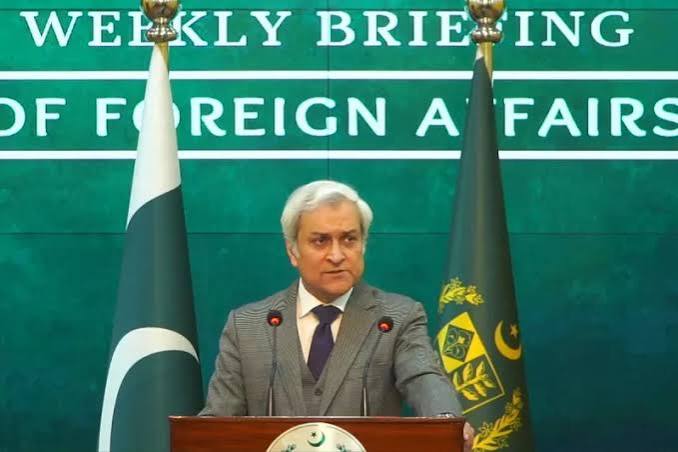
Speaking at a media briefing, Foreign Office spokesperson Tahir Hussain Andrabi said Pakistan unequivocally condemns the use of pellet guns wherever they are deployed, particularly against civilians.
The spokesperson said Indian authorities made extensive use of pellet guns in IIOJK, particularly between 2016 and 2018, adding that the practice has continued in subsequent years.
He referred to reports by Amnesty International, which documented the severe impact of pellet gun injuries, including numerous cases of permanent eye injuries and blindness among those affected.
According to the spokesperson, Amnesty International strongly criticized the use of pellet guns, and the findings have become part of the documented historical record.
Tahir Hussain Andrabi said the United Nations High Commissioner for Human Rights (OHCHR) also addressed the issue in its 2018 and 2019 reports, documenting concerns regarding the use of pellet-firing shotguns in the region.
He added that civil society organizations have continuously monitored the issue and produced reports on victims, rehabilitation efforts, and medical treatment, creating a substantial body of documented evidence.
The Foreign Office spokesperson said Pakistan considers the use of pellet guns against civilians to be condemnable and unacceptable, regardless of where such incidents occur.
More Read

“Whether pellet guns are used in Indian Illegally Occupied Jammu and Kashmir or elsewhere in India, Pakistan strongly condemns their use,” he stated.
He further noted that questions have also been raised under the International Covenant on Civil and Political Rights (ICCPR) regarding the legality and proportionality of using pellet guns for crowd control.
While India has defended the practice by describing pellet guns as a crowd-control measure, the spokesperson maintained that the available international reports and documented evidence continue to raise serious human rights concerns.