

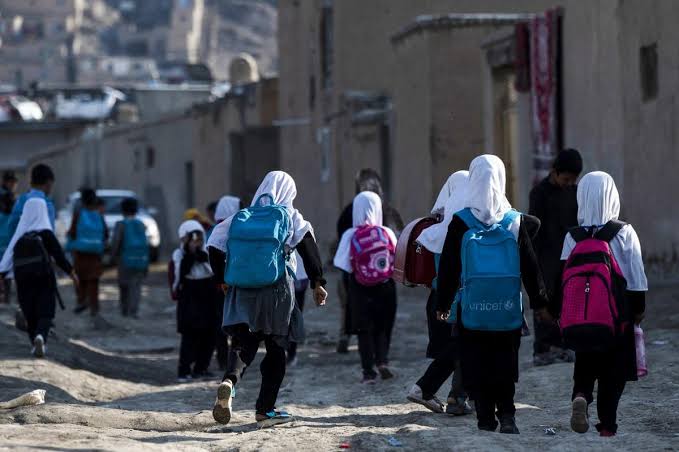
PARIS/KABUL — The Taliban have prevented an estimated 2.4 million Afghan girls from attending secondary school since returning to power in 2021, UNESCO said on Tuesday.
Afghanistan remains the only country where authorities formally prohibit girls and women from secondary and higher education, according to the United Nations Educational, Scientific and Cultural Organization.
UNESCO warned that the restrictions could deprive Afghanistan of decades of human potential and deepen poverty.
Girls’ Education Ban Has Lasted Four Years
The Taliban returned to power in 2021 after the withdrawal of US and allied forces.
The group initially assured the international community that Afghan women and girls would retain access to education.
More Read

However, the Taliban closed secondary schools to girls in March 2022.
Authorities then banned women from attending universities in December 2022.
The Taliban described the restrictions as temporary, but the bans remain in place.
Education Restrictions Could Hurt Afghanistan’s Economy
UNESCO estimates that restrictions on female secondary and higher education could push around 600,000 Afghan women out of the workforce by 2066.
The agency also estimates that the restrictions could result in $9.6 billion in cumulative income losses.
UNESCO warned that the education ban could also increase the risk of early marriage among Afghan girls.
The Taliban-run Ministry of Education did not immediately respond to a request for comment.
Afghanistan Faces Shortage of Female Teachers
UNESCO said the restrictions could create a severe shortage of qualified female teachers.
The agency estimates that Afghanistan could face a shortage of more than 11,000 qualified female teachers by 2030.

Hoda Jaberian, UNESCO’s programme coordinator for education in emergencies, said many teachers had left Afghanistan.
She added that authorities had also prevented some teachers from continuing their work.
According to Jaberian, restrictions on women teaching boys have removed many qualified educators from the education system.
As a result, some boys now receive instruction from unqualified male teachers or have no teachers at all.
Literacy and School Conditions Remain Major Concerns
UNESCO said Afghanistan faces wider challenges across its education system.
More than 90% of 10-year-old children cannot read a simple text, while the national literacy rate stands at about 37%, according to the agency.
Many schools also struggle with overcrowding and inadequate facilities.
Nearly half of Afghanistan’s schools lack basic services such as water, sanitation or heating.
Returns and Natural Disasters Add Pressure
Afghanistan’s education system has also faced pressure from population movements and natural disasters.
UNESCO said around 3 million people returned to Afghanistan in 2025, either voluntarily or through forced returns.
The influx has placed additional pressure on schools and other public services.
Since 2021, earthquakes, floods and other natural disasters have forced around 1,000 schools to close, UNESCO said.
Taliban Restrictions Continue to Draw International Concern
The education ban forms part of broader restrictions that limit women’s employment, movement and participation in public life.
The Taliban say they support women’s rights in accordance with their interpretation of Islamic law and Afghan culture.
UNESCO, however, warned that the continued exclusion of girls and women from education could have long-term consequences for Afghanistan’s economy, workforce and social development.
With the Taliban approaching the fifth anniversary of their return to power, the future of girls’ education remains one of the country’s most significant human rights and development challenges.