

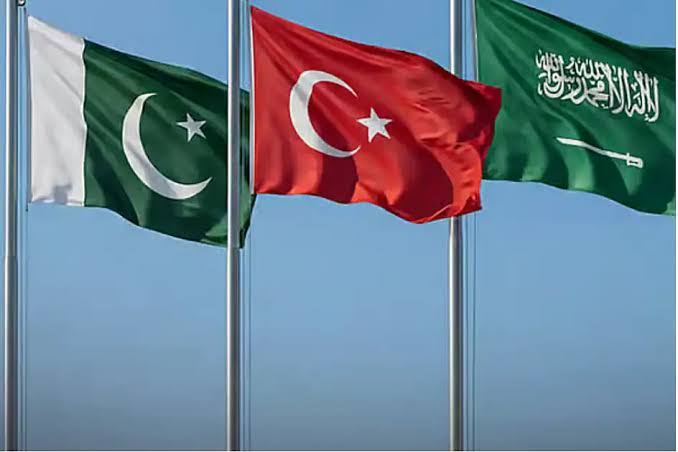
LAHORE: Director General of the Press Information Department (PID) Lahore, Shafqat Abbas, has said that the Makkah Joint Defense Agreement between Pakistan, Saudi Arabia and Türkiye is an important step toward promoting peace, collective security, defense cooperation and regional stability.
He stressed that the agreement is not directed against any country. Instead, its purpose is to promote peace, stability, mutual trust and collective security in the region.
Shafqat Abbas made these remarks while addressing a panel discussion titled “Makkah Agreement: Peace, Security and Stability” organized by PID Lahore on Wednesday.
The event brought together defense analysts, senior journalists, columnists, academics and PID officials.
Agreement Focuses on Peace and Cooperation
Shafqat Abbas said diplomacy, dialogue and mutual cooperation should remain the preferred means of resolving disputes.
He noted that Pakistan, Saudi Arabia and Türkiye each possess distinct capabilities and experience. Linking these strengths, he said, could create a stronger and more effective partnership.
The cooperation could also produce positive results beyond defense. According to Abbas, the three countries can strengthen their economic, diplomatic and strategic cooperation as well.
Economic Strength Also Essential
The PID Lahore chief said national strength today depends on more than military capabilities.
More Read
He pointed to the importance of the economy, education, science and technology, human resources and diplomatic influence.
Pakistan, he said, should use its young population, strategic location and defense capabilities to support national development.
He also stressed the need to translate defense achievements into economic growth, education, research, skills development and higher exports.
A strong economy alongside strong defense capabilities, he added, would help Pakistan play a more effective role internationally.
Pakistan’s Foreign Policy Prioritizes Peace
Shafqat Abbas said peace, mutual respect, sovereignty and regional stability remain important pillars of Pakistan’s foreign policy.
He added that the Makkah Agreement could advance this approach by promoting cooperation and collective security among the three countries.
More Read
Mujeeb-ur-Rehman Shami Calls for Greater Focus on Education
Senior journalist and analyst Mujeeb-ur-Rehman Shami said Pakistan had achieved significant progress in defense, diplomacy and foreign affairs during its history.
He paid tribute to Pakistani diplomats and said the country had maintained its standing internationally despite limited resources.
However, Shami identified education as one of Pakistan’s major challenges. He called for greater investment in education, skills, science, technology and research.
He also stressed the need to increase exports, improve productivity and strengthen the national economy.
According to Shami, Pakistan should use its recent confidence and achievements as a foundation for continued development rather than becoming complacent.
Salman Ghani Highlights Complementary Strengths
Senior journalist Salman Ghani said the Makkah Agreement brings together different strengths possessed by the three countries.
He described Pakistan as a nuclear power, Saudi Arabia as a major economic force and Türkiye as a significant player in defense technology and military industries.
Ghani said the agreement could also have positive effects on economic cooperation, investment and regional stability.
He emphasized that Pakistan must now focus on strengthening its economy alongside its defense capabilities.
Defense Analyst Highlights Strategic Importance
Defense analyst Colonel (retd.) Abid said Pakistani leadership played an important role in the Makkah Agreement.
He also highlighted the role of military diplomacy in advancing the agreement.
According to him, the agreement should not be viewed only through a defense lens. It could also have broader regional, strategic, economic and diplomatic implications.
He said Pakistan’s geographical position could become increasingly important because of growing global interest in mineral resources and Eurasian connectivity.
Experts Call for Broader Muslim Cooperation
Former Vice Chancellor of the Home Economics University Dr. Faleha Afzal said several recent developments could contribute to peace and stability.
She said the Makkah Agreement had further highlighted Pakistan’s role in regional affairs.
Dr. Afzal expressed hope that other Muslim countries could eventually participate in similar cooperation.
She called for greater collaboration among Muslim countries in areas including economic development, education, knowledge, defense and regional peace.
Columnist Malik Salman also described the Makkah Agreement as an initiative aimed at promoting peace and collective security.
He said stronger defense capabilities should be accompanied by economic stability and national development.
Cultural and Social Dimensions Discussed
Professor of Urdu Literature at Government College University Lahore, Dr. Farzana Riaz, said Pakistan’s cultural heritage has deep historical roots.
She described the Makkah Agreement as an initiative that could potentially provide space for broader cooperation among Muslim countries.
Journalist Noorullah said Pakistan had consistently focused on protecting its national security and defense.
He added that the agreement could strengthen Pakistan’s relations with countries that possess significant economic and defense capabilities.
Panel Calls for Dialogue and Collective Strategy
During the discussion, speakers examined the regional, defense, diplomatic, economic and social dimensions of the Makkah Agreement.
They said growing cooperation between Pakistan, Saudi Arabia and Türkiye could contribute positively to regional peace, stability and collective security.
The participants also emphasized the need for Muslim countries to move beyond differences and focus on common interests, development, diplomacy and regional stability.
They said stronger cooperation could open new avenues for partnership and build greater mutual trust.
The speakers further noted that the defense, economic, diplomatic and strategic capabilities of Pakistan, Saudi Arabia and Türkiye could complement one another.
They argued that closer coordination among the three countries could therefore contribute to wider regional stability.
Call for Economic and Human Development
The participants stressed that defense strength should be accompanied by economic progress and human development.
They called for greater attention to education, research, technology, skills, exports and employment opportunities.
The discussion concluded with remarks from Shafqat Abbas, who thanked the participants and guests.
He said the detailed discussion had helped explain different aspects of the Makkah Agreement.
He also emphasized the importance of such intellectual and analytical forums in raising public awareness about national and international affairs and promoting constructive dialogue.