


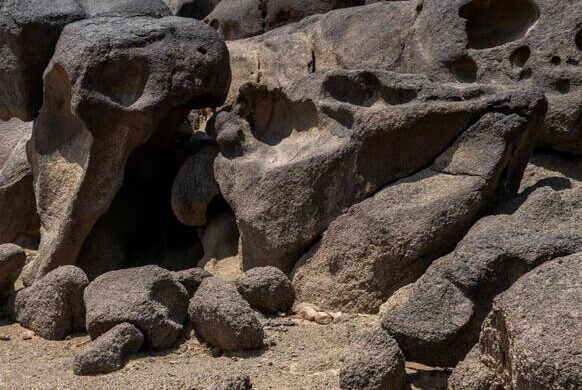
Archaeologists have found evidence of a human settlement dating back 1.8 million years in Saudi Arabia.
The site lies in Shaab Dahdah, in the Najran region of southern Saudi Arabia.
According to Urdu News, the Saudi Heritage Commission called the discovery important evidence of early human settlement and migration in southern Arabia.
The stone tools found at the site date from the Lower Paleolithic period.
Experts estimate that the tools are between 1.2 million and 1.8 million years old.
More Read

34 Stone Tools Found
Researchers found a collection of 34 stone tools during a survey in 1980.
The tools came from a raised area in the valley.
Ancient people made the tools from quartzite. This type of stone is both hard and durable.

The collection includes several types of cutting tools.
It also contains scrapers, blades and hammerstones.
Tools Show Early Human Skills
Researchers believe ancient people used the tools for different tasks.
For example, they could use the tools to cut meat and break bones.
The tools may also have helped people remove animal skins.
Their design shows that early humans knew how to use local stone resources.

The tools also provide clues about how early communities lived in the region.
Discovery Offers New Archaeological Evidence
Dr. Al-Otaibi, Director General of the Archaeology Department at the Heritage Commission, highlighted the importance of the site.
He said Shaab Dahdah provides important scientific information about early human presence in the Arabian Peninsula.
The site can also help researchers study early human movement across southern Arabia.
According to the Najran Society for History and Archaeology, the stone tools show the skill and ability of early humans.
They demonstrate how ancient communities used materials available in their local environment.
Importance for Saudi Arabia’s History
The discovery adds to the growing archaeological record of human activity in Saudi Arabia.
The Arabian Peninsula played an important role in early human movement and migration.
Sites such as Shaab Dahdah can help researchers understand these early movements.
Furthermore, the stone tools offer a rare look at the daily activities of people who lived in the region more than a million years ago.
The findings could also support further archaeological research in Najran and other parts of the Arabian Peninsula.