

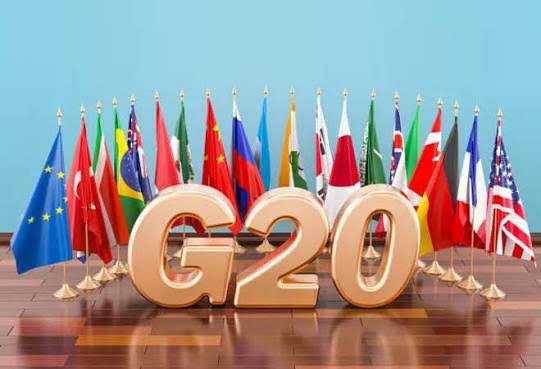
ASHEVILLE: G20 finance ministers and central bank chiefs have begun a two-day meeting in the US city of Asheville.
The meeting focuses on major challenges facing the global economy.
Key issues include economic growth, rising debt, trade imbalances and the energy crisis.
The United States is also seeking stronger economic pressure on Iran.
Washington has also called for a review of trade relations with China.
More Read

US Calls for Faster Global Growth
US Treasury Secretary Scott Bessent and Federal Reserve Chair Kevin Warsh addressed the meeting at its opening.
Bessent said the global economy has grown below its potential for several years.
He argued that faster economic growth offers a way out of the rising global debt burden.
More Read

According to Bessent, debt levels increased sharply after the global financial crisis and the COVID-19 pandemic.
Global debt has now reached about $353 trillion, according to figures cited at the meeting.
Bessent said stronger growth could help countries manage their growing debt.
Investment Opportunities Expand
Federal Reserve Chair Kevin Warsh also pointed to changes in global investment trends.
He said the world is entering a period with more investment opportunities.
As a result, the long-standing trend of excess global savings could begin to change.

Warsh said higher investment could support economic growth in the years ahead.
However, the shift could also affect global capital flows and financial markets.
US Seeks Changes in China Trade Relations
China has emerged as another major issue at the G20 meeting.
Bessent urged G20 members to review the terms of their trade relations with China.
He also called for consideration of additional trade barriers when necessary.
The US Treasury secretary argued that China should rely more on domestic consumption rather than exports.
He said China currently has a trade surplus of about $1.2 trillion.
According to Bessent, the surplus creates a major imbalance in the global economy.
The US also wants greater international discussion of industrial subsidies and weak domestic demand in China.
Washington Seeks More Pressure on Iran
The United States is also using the G20 meeting to seek support for stronger economic measures against Iran.
Bessent has pushed for additional sanctions against Tehran.
He has also called for action against Iranian banks and further restrictions on Iran’s access to the global financial system.
The move forms part of Washington’s wider campaign to increase economic pressure on Iran.
However, Bessent acknowledged that the situation around the Strait of Hormuz must also be considered.
Oil Prices Remain a Major Concern
The Strait of Hormuz remains one of the world’s most important energy routes.
A prolonged disruption could affect the supply of oil and gas to global markets.
It could also push energy prices higher.
Therefore, the United States faces a challenge in balancing pressure on Iran with the possible impact on global energy markets.
G20 members are expected to discuss these risks as they assess the wider economic outlook.
Global Economy at Center of Talks
The meeting comes as governments face pressure from high debt, weak growth and trade tensions.
Energy security has added another challenge.
At the same time, major economies are seeking policies that can encourage investment and support long-term growth.
The discussions in Asheville could therefore shape the G20’s approach to global economic and financial challenges.