

SAN DIEGO: The US aircraft carrier USS Abraham Lincoln has returned to California after a 322-day deployment that included combat operations during the US-Israeli war against Iran.
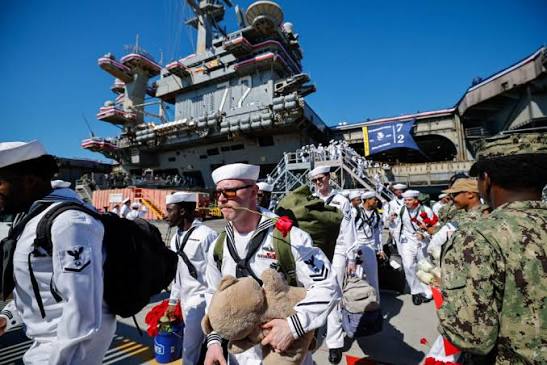
The carrier arrived at Naval Air Station North Island in San Diego on Thursday, October 8. Its crew spent 265 consecutive days at sea, setting a modern record for an uninterrupted period without a port visit. Hundreds of family members and friends gathered to welcome the sailors home.
Emotional Reunions After Months at Sea
Returning sailors expressed relief at seeing their families again and enjoying fresh food. Many had spent nearly 11 months away from home.
One sailor’s wife said her husband had told her about food shortages aboard the carrier. She also said he was meeting their four-year-old daughter again after about 10 months apart.
The long deployment also meant that some crew members met their newborn children for the first time. According to reports, 122 sailors became fathers while the carrier remained deployed.
More Read

Reports of Food Shortages and Difficult Conditions
The extended mission drew attention to conditions aboard the carrier. Reports described shortages of fresh food and basic supplies, problems with shower facilities and growing concerns about the crew’s mental health.
US officials also confirmed that eight personnel attempted suicide during the deployment. The reports raised questions about the impact of prolonged combat missions on sailors and the Navy’s ability to maintain crew readiness.
However, officials disputed some criticism of conditions aboard the ship. Defense Secretary Pete Hegseth praised the crew’s service, while President Donald Trump dismissed reports about the carrier’s problems as false.

Carrier Supported Operations Against Iran
The USS Abraham Lincoln began its deployment in November 2025. The Navy later redirected the carrier strike group to the Middle East as US and Israeli military operations against Iran expanded.
During the mission, the carrier supported combat operations and remained at sea for an unusually long period. The ship left the Middle East in August before making its way back to California.
The deployment highlighted the operational demands of sustaining naval forces during a major regional conflict. At the same time, the crew’s return renewed debate over the effects of extended deployments on service members and their families.
Pew Survey Shows Opposition to Trump’s Iran Policy
Meanwhile, a Pew Research Center survey published on October 8 found that 65% of US adults disapproved of President Trump’s handling of military action against Iran. Only 33% said they approved.
The survey covered US adults between September 28 and October 4, 2026. It also found that many Americans expected the conflict to continue for months.
The conflict has also disrupted commercial shipping through the Strait of Hormuz, a key route for global oil supplies. These disruptions have heightened concerns about energy prices, inflation and the wider economic impact of the war.