

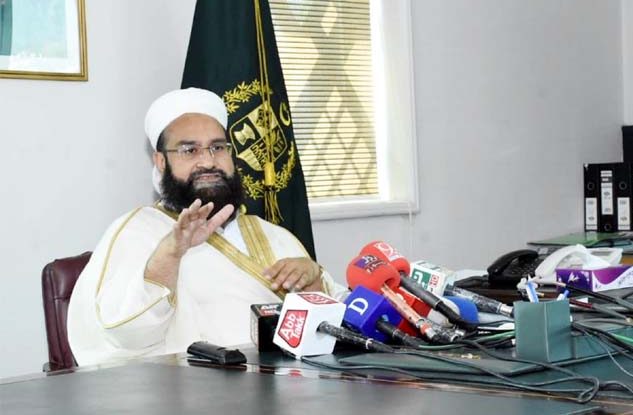
Secretary General of the International Council for the Reverence of the Two Holy Mosques and Chairman of the Pakistan Ulema Council, Hafiz Tahir Mehmood Ashrafi, has said that Pakistan’s army has not gone to Yemen. He also clarified that no Pakistani aircraft had reached the country. Therefore, he urged people to stop spreading fake news about Pakistan’s military role.
Ashrafi made these remarks during an intellectual session organized by the Punjab Provincial Paigham-e-Aman Committee. Participants discussed the current situation in Pakistan and the wider Muslim world. Religious scholars and leaders from different faiths and schools of thought also attended the session.
National Unity Is Essential to Fight Terrorism
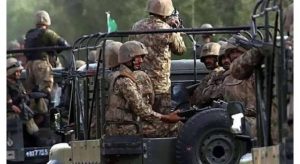
Ashrafi called for national unity against terrorism. He said police officers, military personnel and civilians in Khyber Pakhtunkhwa continue to face attacks.
He urged federal and provincial governments to support the families of fallen personnel and injured victims. He also stressed the need to stand with those who have lost loved ones in the fight against terrorism.
“Our police officers and soldiers are also our own sons,” Ashrafi said. He called on Khyber Pakhtunkhwa’s leadership to stand firmly with the families of those who have sacrificed their lives.
More Read
Moreover, he urged political leaders to keep national security separate from political disputes. Political differences may continue, he said. However, those differences must not obstruct state affairs or efforts to combat terrorism.
Emergency Measures Must Focus on Peace
Ashrafi said any decision to impose an emergency in Khyber Pakhtunkhwa should aim to eliminate terrorism. He warned against using such a measure for political purposes.
He also advised the provincial chief minister to contact the prime minister. According to Ashrafi, both federal and provincial leaders should work together under the National Action Plan to tackle terrorism.
More Read
In addition, he urged all political parties, including Pakistan Tehreek-e-Insaf (PTI), to pursue dialogue. He stressed that negotiations, rather than violence, offer a way to resolve political disputes.
Respect for All Religions and Sacred Sites
Ashrafi described Pakistan as a shared homeland for people of different religions and schools of thought. He said the state and society must work together to protect the rights of religious minorities.
He added that Islam grants rights to minorities and that authorities must ensure their protection in practice.
According to Ashrafi, the National Paigham-e-Aman Committee brings together people from different religious communities, from Karachi to Khyber. The platform seeks to address the concerns of Christians, Hindus, Sikhs and other communities through dialogue and cooperation.
He also highlighted the message of Paigham-e-Pakistan: “Follow your own school of thought, but do not interfere with the school of thought of others.”
Furthermore, Ashrafi said Islam and other religions reject insults against sacred beliefs and symbols. He called for greater religious respect, tolerance and mutual understanding across society.

Ashrafi Highlights Defence Cooperation with Saudi Arabia and Türkiye
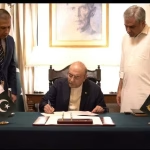
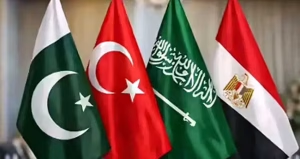
Ashrafi described defence agreements involving Saudi Arabia and Türkiye as important for the Muslim world. He said such cooperation reflects the sentiments of Muslims.
He also stressed the importance of protecting Makkah and Madinah. According to Ashrafi, Muslims regard the security of the two holy cities and the Prophet’s Mosque as a matter of great importance. He condemned any attack on the holy sites.
Meanwhile, he highlighted the role of Pakistanis living in Saudi Arabia and the United Arab Emirates. He noted that millions of Pakistanis work in these countries.
Sikh Leader Sardar Ranjit Singh Calls for Peace
Speaking at the session, Sardar Ranjit Singh described Pakistan as a home of peace and love. He said humanity stands above religious divisions.
He urged Pakistanis to work together to promote peace. He also stressed cooperation with religious minorities and the Pakistan Armed Forces.
In addition, Singh called on citizens to spread a message of peace and love. He said collective efforts remain important for the country’s stability.
Bishop Nadeem Kamran Urges Collective Efforts for Progress
Bishop Nadeem Kamran called for joint efforts to promote Pakistan’s development and prosperity. He highlighted the responsibility of citizens during the country’s current challenges.
He also urged people to continue contributing to peace, stability and national progress.
The speakers concluded by emphasizing interfaith harmony and the protection of minority rights. They also called for national unity against terrorism and political dialogue to support lasting peace.