

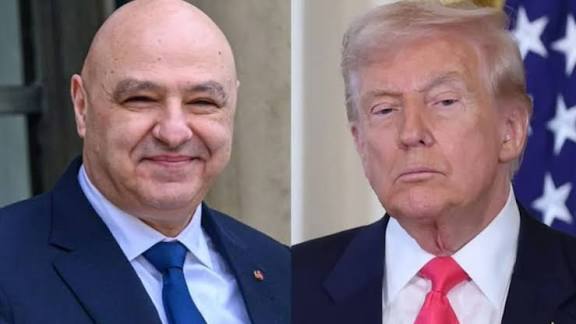
BEIRUT: Lebanese President Joseph Aoun is set to make his first official visit to the White House this week, where he will meet U.S. President Donald Trump in an effort to secure American support for a plan aimed at disarming Hezbollah and ensuring Israel’s withdrawal from southern Lebanon.
The meeting marks the first face-to-face talks between Aoun and Trump and makes Aoun the first Lebanese head of state to visit the White House in nearly two decades. Before assuming the presidency last year, Aoun served as commander of the U.S.-backed Lebanese Armed Forces.
The visit comes at a critical moment for Lebanon, as Israeli forces continue to maintain positions in parts of southern Lebanon, hundreds of thousands of civilians remain displaced following months of conflict, and Hezbollah continues to reject direct negotiations between the Lebanese government and Israel.
According to comments published by his office last week, President Aoun intends to urge President Trump to exert “the necessary pressure” on Israel to implement the June 26 U.S.-mediated agreement between Lebanon and Israel. The agreement reportedly outlines steps toward Hezbollah’s disarmament, a phased Israeli military withdrawal, and the establishment of more stable relations between the two neighboring countries.
A Lebanese official familiar with the preparations said Aoun will present Trump with a written proposal detailing how Hezbollah’s heavy weapons could be dismantled. The official added that Aoun believes only the U.S. president has sufficient influence to persuade Israel to withdraw its forces and help restore Lebanon’s sovereignty.
More Read
Hezbollah Disarmament at the Center of Talks
President Aoun, 62, assumed office during a period of significant political change in Lebanon following Israel’s 2024 military campaign against Hezbollah and the fall of former Syrian President Bashar al-Assad, developments that significantly weakened the Iran-backed armed group and reshaped Lebanon’s political landscape.
During his inauguration, Aoun pledged to reinforce the state’s exclusive authority over weapons, emphasizing that only the Lebanese state should possess arms.
His administration has since prioritized efforts to reduce Hezbollah’s military capabilities. Following the 2024 conflict, the Lebanese Army expanded its deployment across southern Lebanon and has reportedly collected weapons caches in areas where Hezbollah’s influence has diminished.

Renewed Conflict Complicates Diplomatic Efforts
Despite those efforts, regional tensions escalated again after Hezbollah launched attacks against Israel on March 2 in support of Iran during its confrontation with the United States and Israel.
The exchange triggered an extensive Israeli air and ground campaign in Lebanon. According to Lebanon’s Health Ministry, more than 4,300 people have been killed, including civilians, women, children, and healthcare workers, although the ministry does not distinguish between civilians and combatants. Hezbollah has not publicly disclosed the number of its fighters killed.
Since the conflict resumed, Aoun has advocated direct dialogue with Israel—an unprecedented position in modern Lebanese politics. His stance has drawn criticism from Hezbollah and its supporters, particularly after he argued that Lebanon should not be devastated because of broader regional conflicts involving Iran.
However, despite supporting negotiations, Aoun has reportedly stopped short of endorsing Trump’s proposal for a direct meeting with Israeli Prime Minister Benjamin Netanyahu.
President Aoun’s visit is expected to test whether Washington can help advance diplomatic efforts to stabilize Lebanon while balancing the competing security concerns of Israel, Lebanon, and regional actors.