


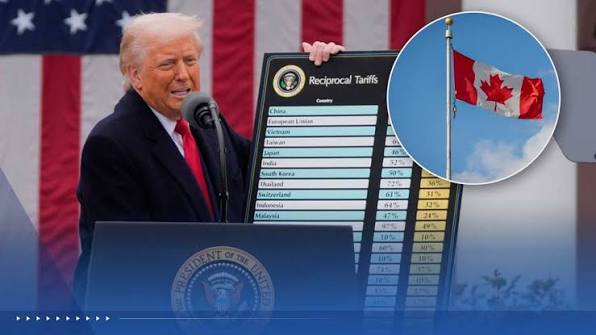
WASHINGTON: US President Donald Trump has announced a 50 percent tariff on most Canadian imports, significantly escalating trade tensions between the United States and Canada. The White House said the decision was taken in response to what it described as Canada’s discriminatory trade practices affecting American automobiles, alcoholic beverages, and dairy products.
According to the administration, the new tariffs will take effect 30 days after the signing of three presidential proclamations issued under Section 338 of the US Trade Act of 1930. Officials argued that Canada was among the few countries that retaliated against previous US tariffs and therefore should be held accountable.
Products Covered and Exemptions
The White House said the tariffs will apply to a broad range of Canadian products, including consumer goods such as wine, hockey equipment, and cement.
However, several strategic products have been exempted from the new measures, including:
- Energy products
- Potash
- Fish
- Critical minerals
The administration also confirmed that many goods previously protected under the United States-Mexico-Canada Agreement (USMCA) will now become subject to the new tariff regime following the expiration of certain trade provisions.
More Read

Trump Cites Auto, Dairy and Alcohol Disputes
President Trump argued that Canada has imposed unfair barriers against American products, particularly automobiles, dairy items, and alcoholic beverages.
The White House pointed to Canada’s 25 percent tariff on certain US-manufactured vehicles introduced in April 2025, as well as restrictions imposed by several Canadian provinces on the sale of American alcoholic beverages.
Trump also criticized Canada’s long-standing dairy import policies, claiming they provide preferential treatment to European producers while limiting market access for American cheese exports.
More Read

Economic and Political Impact
Economists warn that the new tariffs could increase import costs for businesses and consumers, potentially adding fresh inflationary pressure to the US economy.
Tariffs are taxes paid on imported goods, and businesses often pass those additional costs on to consumers through higher retail prices.
The announcement comes just months before the US midterm elections, where economic performance is expected to be a central campaign issue. Critics argue that another round of tariffs could disrupt supply chains, increase consumer prices, and create uncertainty for businesses on both sides of the border.
Legal and Diplomatic Challenges
The policy also follows a US Supreme Court ruling earlier this year that questioned the administration’s previous authority to impose broad tariffs under emergency powers. In response, the White House has relied on alternative legal mechanisms, including Section 338 of the Trade Act, to implement the new import duties.
Relations between Washington and Ottawa have remained strained in recent months. Although President Trump and Canadian Prime Minister Mark Carney attended the FIFA World Cup final together over the weekend, US officials emphasized that no formal trade negotiations took place during the meeting.
The Trump administration also indicated that additional trade measures against Canada remain under consideration, including possible tariffs linked to environmental issues such as the impact of Canadian wildfires on US air quality.

The latest move is expected to trigger renewed discussions between the two governments as businesses and investors assess the potential consequences for North American trade and economic cooperation.