

Iran and Oman have achieved a significant diplomatic breakthrough by reaching a preliminary agreement on the geographical framework for a proposed safe shipping corridor through the Strait of Hormuz, one of the world’s most strategically important maritime waterways.
Iranian officials confirmed that technical negotiations with Oman have resulted in an understanding regarding the geographic coordinates of a new commercial navigation route. The two neighboring countries are now working on a joint statement expected to outline the next phase of cooperation.
However, Iranian authorities cautioned that the agreement could still face challenges if external actors intervene before the negotiations are finalized.
Joint Statement Under Preparation
Iran’s Foreign Ministry confirmed that officials from both countries are drafting a joint communiqué that will explain the framework of the proposed maritime arrangement.
Foreign Ministry spokesperson Esmail Baghaei stressed that agreement on a navigation corridor alone does not guarantee complete security in the Strait of Hormuz.
More Read

According to Baghaei, long-term maritime stability depends on broader political, military and regional security conditions beyond the technical agreement currently under discussion.
Proposed Shipping Arrangement
International sources familiar with the negotiations indicate that the proposed framework could establish separate inbound and outbound shipping lanes.
Under the reported proposal:

- Ships entering the Persian Gulf would travel through a route monitored by Iran.
- Vessels leaving the Gulf would use a corridor managed by Oman.
The objective is to organize maritime traffic more efficiently while reducing the risks of military incidents and navigation conflicts in one of the world’s busiest energy corridors.
Officials emphasized that discussions remain ongoing and that the operational details have not yet been finalized.
Outstanding Issues Remain
Despite progress on navigation routes, several key issues continue to be negotiated.
One of the main points concerns service charges for commercial vessels using the corridor.
According to diplomatic sources:
- Iran supports collecting service fees from passing ships.
- Oman favors lower administrative charges.
- The United States continues to oppose any arrangement that grants Iran exclusive authority or mandatory fees for international shipping.
These issues remain among the primary obstacles to a comprehensive agreement.

Indirect Diplomatic Contacts Continue
Although Tehran maintains that its direct negotiations are only with Oman, U.S. officials have indicated that indirect communications between Washington and Tehran continue through Omani mediation.
U.S. Secretary of State Marco Rubio recently acknowledged that discussions have made meaningful progress but said no final agreement has yet been reached.
Earlier, U.S. President Donald Trump also stated that negotiations with Iran had been encouraging, while warning that prolonged disruption of the Strait of Hormuz could lead to serious consequences.
According to Trump, broader discussions may eventually include Iran’s nuclear program alongside maritime security arrangements.
Why the Strait of Hormuz Matters
The Strait of Hormuz is considered one of the world’s most critical maritime chokepoints.
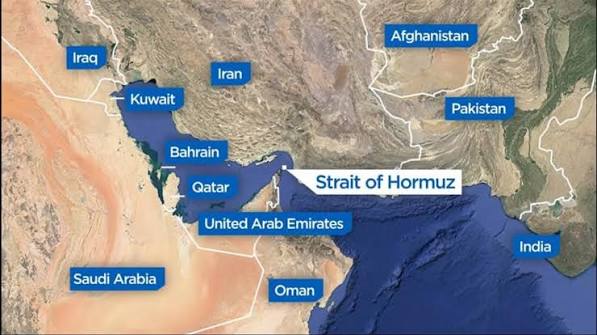
It connects the Persian Gulf with the Gulf of Oman and the Arabian Sea and serves as the primary export route for crude oil and liquefied natural gas from Saudi Arabia, Iraq, Kuwait, Qatar, Bahrain and the United Arab Emirates.
Any disruption to shipping through the strait has the potential to affect global energy markets, increase transportation costs and influence international oil prices.
As negotiations continue, regional governments and global markets remain closely focused on whether the proposed maritime framework can restore secure commercial navigation while reducing tensions in the Gulf.