

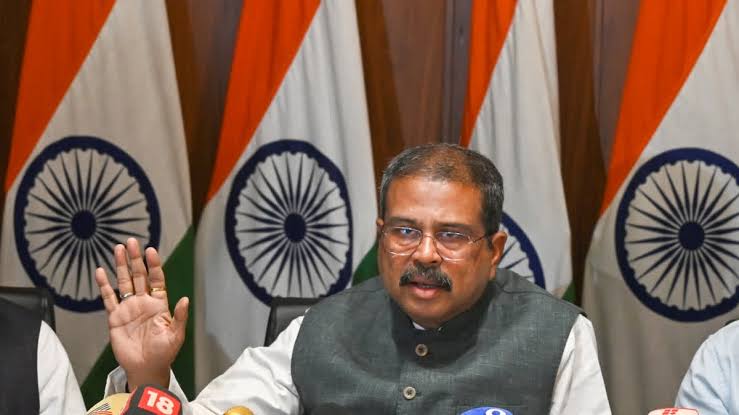
NEW DELHI: India’s Education Minister Dharmendra Pradhan has resigned after weeks of nationwide student protests over alleged examination paper leaks and irregularities, with Prime Minister Narendra Modi accepting his resignation, according to Indian media reports.
The resignation marks a significant victory for the youth-led protest movement known as the Cockroach Janata Party (CJP), which has led demonstrations demanding accountability over alleged failures in the country’s examination system.
A spokesperson for the movement said the government had formally accepted all of the group’s demands in writing.
“Our demands have been officially accepted. We will now end the protest and return home,” the spokesperson said.
However, CJP leader Abhijeet Deepke said his organization had not yet received direct communication from the government.

“If Education Minister Dharmendra Pradhan has resigned, that is a very positive development. The government had repeatedly claimed that ministers do not resign under this administration, but today we proved otherwise,” he said.
The protests began nearly two months ago at Jantar Mantar in New Delhi following allegations of examination paper leaks, corruption, and irregularities within India’s education system.
Prominent Indian education activist Sonam Wangchuk joined the movement, undertaking a 26-day hunger strike in support of protesting students before ending his fast after negotiations with government representatives.

Demonstrations spread to several Indian cities, with thousands of students demanding the education minister’s resignation. During protests in New Delhi, police used batons, tear gas, and pellet guns to disperse demonstrators attempting to march toward Parliament.
Authorities said 178 police officers were injured and around 70 protesters were detained, while clashes reportedly left more than 60 people injured.
According to protest leaders, negotiations with the government resulted in the acceptance of key demands, including the resignation of the education minister.
Other reported demands included the withdrawal of criminal cases filed against students following protests on July 20 and financial compensation of 10 million Indian rupees (₹1 crore) for each family of students who allegedly died by suicide after being affected by examination system failures.
The movement also criticized online campaigns targeting Sonam Wangchuk, describing attempts to discredit the activist after his prolonged hunger strike as unacceptable.
The resignation represents one of the most significant political concessions made by the Indian government in response to sustained youth-led demonstrations in recent years.