

WASHINGTON/CAIRO: The United States and Iran have resumed major military attacks after a months-long lull.
The latest exchange marks the most serious fighting between the two sides in weeks. It has also raised fears of a wider regional conflict.
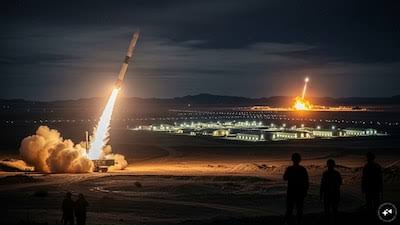
US Central Command said American forces struck several Islamic Revolutionary Guard Corps (IRGC) targets on Tuesday.
The targets included air defense systems, radar sites, maritime assets, mine-laying capabilities and communications facilities.
Iran Retaliates Against US-Linked Targets
Iran said it responded with missile and drone attacks against US assets in the region.
More Read

Iranian officials reported attacks involving targets in Jordan and Iraq. Iranian media also reported attacks involving Bahrain.
The IRGC claimed that its attacks killed a large number of US personnel in Jordan. However, two US officials told Reuters that initial assessments showed no American casualties.
The IRGC also claimed attacks on US bases in Erbil, northern Iraq. Neither the US nor Iraq immediately confirmed those claims.

Jordan Intercepts Ballistic Missiles
Jordan’s armed forces said its air defenses dealt with 13 ballistic missiles that entered Jordanian airspace.
Authorities said they intercepted 10 missiles. The remaining three fell in remote areas.
Meanwhile, Bahrain said its forces intercepted and destroyed Iranian drones.
In Kuwait, Iranian drones reportedly struck a residential complex. Kuwait’s fire service said the attack caused damage but no casualties.
The IRGC also claimed a missile and drone attack on Kuwait’s Ali Al Salem Air Base.
Civilian Deaths Reported at Wedding
One of the most serious developments involved civilian casualties in southern Iran.

The Iranian Red Crescent said a US strike near Sirik, on the Strait of Hormuz, killed five people at a wedding and wounded dozens.
Iranian news agencies gave different figures for the wounded. Mehr reported that a four-year-old child was among those killed, while IRNA cited a provincial official who put the number of wounded at 68.
US officials had not publicly commented on the reported incident at the time of the Reuters report.
Iran’s Foreign Ministry condemned the strike and said Tehran would respond firmly.
Trump Threatens Further Pressure
US President Donald Trump defended Washington’s position as the fighting resumed.
Trump said the United States now had almost total control of the Strait of Hormuz. He also described Iran’s economy as collapsing.
Iran’s joint military command issued a warning in response.
It said countries that support US military operations in the region could face heavier and wider Iranian attacks.
The statements have increased concern about further escalation.
Strait of Hormuz Remains a Major Flashpoint
The Strait of Hormuz remains central to the conflict.
The narrow waterway carries a major share of the world’s oil shipments. Therefore, any prolonged disruption could have major effects on global energy markets.
The latest fighting has already pushed oil prices higher. Brent crude moved above $95 a barrel on Wednesday amid renewed concerns about supply disruptions.
Qatar also warned that Iran’s attacks could make efforts to contain the crisis more difficult.
Doha had helped mediate an earlier ceasefire. However, that agreement quickly broke down.
Conflict Puts Pressure on Both Sides
The renewed fighting comes after months of limited military activity.
During the lull, neither Washington nor Tehran showed strong interest in returning to negotiations.
At the same time, the conflict has placed growing pressure on both countries.
Iran’s economy has suffered further damage from the war. Its conventional military capabilities have also faced heavy losses.
Meanwhile, the United States has used a large amount of its stockpile of long-range precision missiles. Reuters previously reported that the situation had raised concerns about US military readiness for future conflicts.
Risk of Wider Regional Conflict
The latest exchange has spread beyond Iran’s borders.
Attacks and interceptions have been reported across Jordan, Kuwait, Bahrain and Iraq. As a result, governments across the region face growing security risks.
For now, both Washington and Tehran continue to issue threats rather than signals of de-escalation.
The renewed fighting therefore raises the risk of a broader regional conflict, particularly if attacks on US forces, Iranian targets or commercial shipping continue.
The situation remains highly fluid, with further military action possible in the coming days.