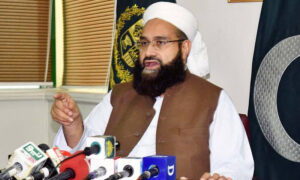


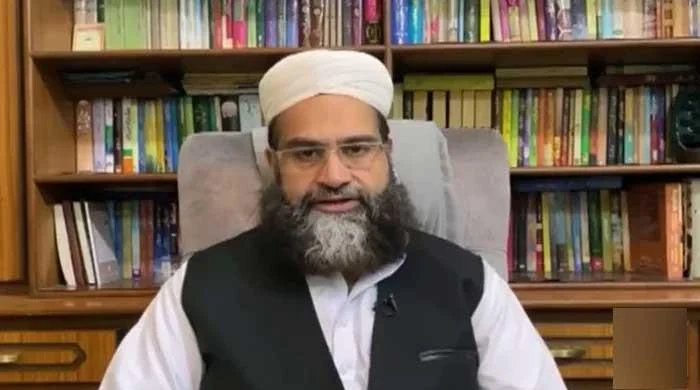
Pakistan’s National Peace Message Committee has completed its first year, with Coordinator Hafiz Muhammad Tahir Mahmood Ashrafi highlighting its work for religious harmony, national unity, peace and countering extremism.
Ashrafi, who also chairs the Pakistan Ulema Council, said the committee had played a positive role during its first year. He made the remarks in a special video message marking its first anniversary.
The committee was established on September 9, 2025, on the directions of Prime Minister Shehbaz Sharif. Its formation also reflected the vision and approach of Field Marshal Syed Asim Munir, particularly on national security, unity and stability.
Muslim and Minority Leaders United
Ashrafi said the committee brought all major Muslim schools of thought together on one national platform.
For the first time in such a national initiative, Muslim religious leaders also joined hands with representatives of Christian, Hindu, Sikh and other religious communities.
More Read

He said the approach created a broader platform for dialogue, tolerance and national unity.
Inter-Sectarian Unity in Practice
Ashrafi highlighted joint prayers by scholars from different schools of thought as one of the committee’s key achievements.
He said religious leaders had prayed together at Jamia Rashidia, Jamia Ashrafia and other institutions in different parts of Pakistan.
These gatherings, he said, challenged the perception that scholars from different schools of thought could not stand together behind one imam.
The committee also promoted dialogue between religious leaders and encouraged cooperation during sensitive religious occasions.
Protection of Religious Minorities
Ashrafi said leading religious scholars also visited churches and gurdwaras during the past year.
They conveyed a clear message to non-Muslim Pakistanis that Pakistan is equally their homeland and that their rights must receive full protection.
The committee also focused on the protection of places of worship and the promotion of interfaith dialogue.
Role During Muharram and Regional Crises
Ashrafi highlighted the peaceful observance of Muharram as another example of national cooperation.
He said scholars from different schools of thought showed responsibility and unity during sensitive religious occasions.
The committee also responded to wider regional developments, including the Iran-US-Israel conflict, while urging religious communities to maintain peace and national unity.
Recent government reporting also credited cooperation among religious leaders, the government and security institutions with helping maintain peace during Muharram.
Strong Stand Against Extremism and Terrorism
Ashrafi said hundreds of scholars and religious leaders had joined efforts against extremism and terrorism.
He said religious leadership had expressed solidarity with Pakistan’s security institutions and armed forces in the fight against terrorism.
He also said the committee had challenged extremist narratives linked to what Pakistani authorities describe as Fitna al-Khawarij and Fitna al-Hindustan.
Ashrafi stressed that the committee would continue to promote the peaceful teachings of Islam and reject sectarian violence, extremism and terrorism.
Promoting the Paigham-e-Pakistan Narrative
The committee also worked to promote the principles of Paigham-e-Pakistan.
These principles focus on peace, tolerance, national unity, dialogue and rejection of violence in the name of religion.
Ashrafi said the committee would take this message to the grassroots level. He also called for stronger cooperation between religious leaders, government institutions and security agencies.
A Broader National Mission
Ashrafi said the committee’s work should not remain limited to Islamabad or major cities.
He said its message should reach communities across all provinces and regions.
The long-term goal, he said, is to help build a society based on peace, religious tolerance, mutual respect and dialogue.
He also thanked Prime Minister Shehbaz Sharif, the federal and provincial governments, Information Minister Attaullah Tarar, Field Marshal Syed Asim Munir, security institutions and religious leaders for their support.
Ashrafi said the first year should be viewed as the beginning of a longer national effort rather than its conclusion.