

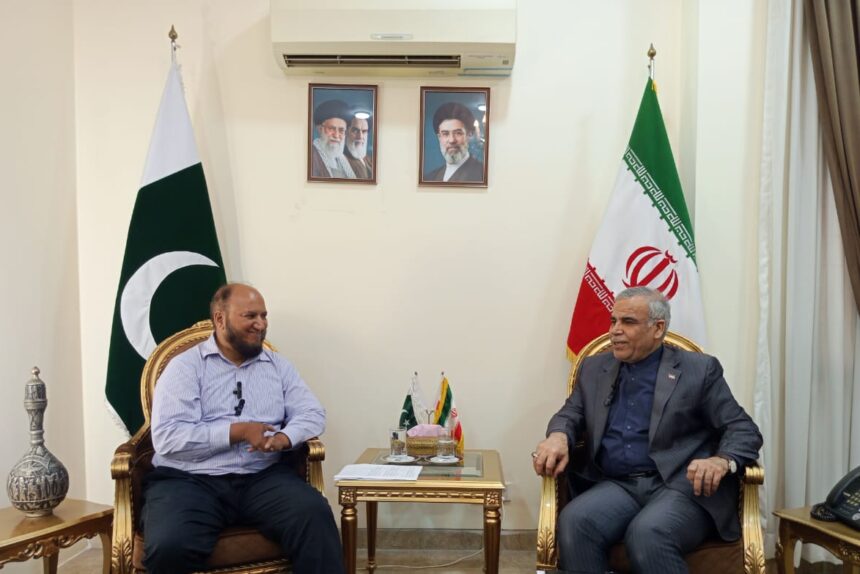
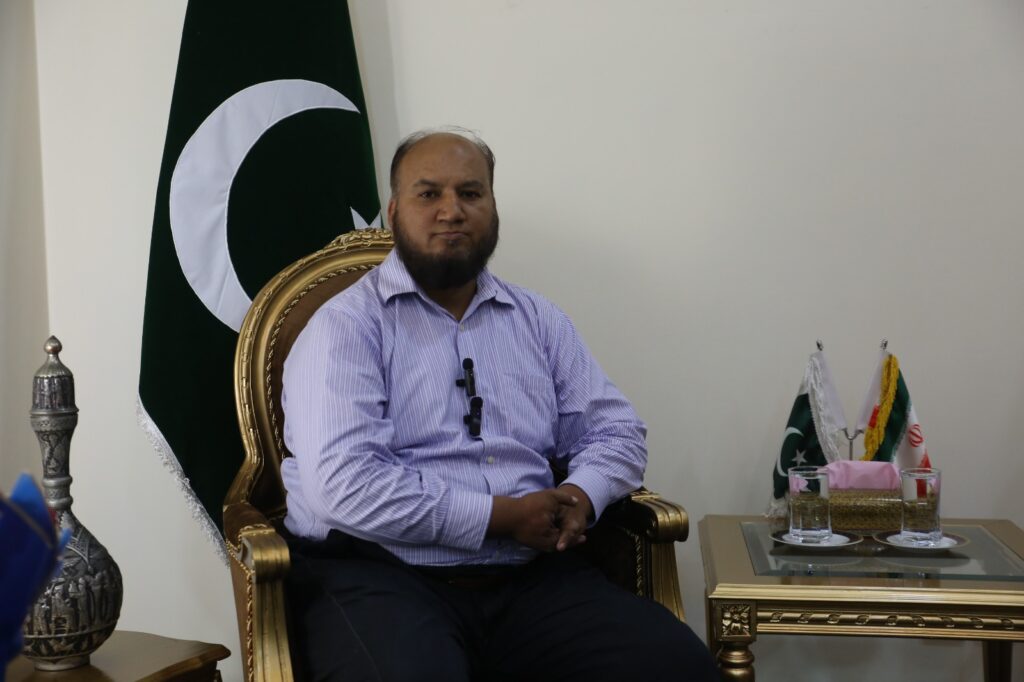
Interview: Syed Farzand Ali
Executive Summary
- Reverence for Lahore: The Consul General described Lahore as a magnificent historical and literary city, sharing that he visited the Tomb of Allama Iqbal before assuming charge. He emphasized that the historical foundations of Lahore prove the deep and unshakable roots of Pak-Iran relations.
- Pak-Iran Gas Pipeline: The U.S. is using coercive measures to prevent Pakistani citizens from benefiting from this vital energy project. He expressed hope that Chief of Army Staff General Asim Munir, leveraging his diplomatic ties, would find a viable path forward for the completion of the pipeline.
- Chabahar vs. Gwader: The Chabahar and Gwadar ports are not rivals but sister ports. By connecting Pakistan, China, Central Asia, and European markets, they can collectively transform the region into a global energy hub.
- Strait of Hormuz & Transit Fees: Iran provided free maritime services in the Strait of Hormuz for centuries. However, following U.S. and Israeli aggression, transit fees were introduced solely to cover environmental, management, and security costs. Iran’s tariffs will remain fair and minimal compared to Trump’s proposed 20% cargo tax.
- Omani Waters & Maritime Security: Wartime operations dictate their own legal parameters. As long as national security threats persist, vessels must adhere to the maritime corridors designated by Iran.
- Violation of the 60-Day Truce: While Pakistan played a historic role in brokering the peace agreement, the U.S. repeatedly violated the treaty within the first 30 days because Washington does not genuinely believe in peace.
- The Paradigm of Retaliation and Dialogue: Avenging the martyrdom of the Supreme Leader is an absolute public demand against war crimes. This stance is purely an act of national defense and sovereignty, independent of diplomatic negotiations.
- Assessment of Wartime Infrastructure Damages: During the 40-day conflict, U.S. forces targeted Iranian civilian infrastructure, damaging 123,000 homes, 30 hospitals, 1,200 schools, 30 universities, and critical water networks. In response, Iran’s military leadership has vowed to target regional infrastructure if escalation continues.
- The “Greater Israel” Ambition: Accusations that Iran seeks hegemony over Arab nations are unjust. Israel has publicly published a map of “Greater Israel” encompassing parts of Lebanon, Syria, Egypt, and Saudi Arabia, and Iran stands as the sole barrier against this expansionist agenda.
- Health of Ayatollah Seyed Mojtaba Khamenei: Rumors propagated by Donald Trump claiming the leader’s son is in critical health (90% unwell) are entirely baseless. He is in perfect health but is temporarily out of the public eye strictly due to security protocols.
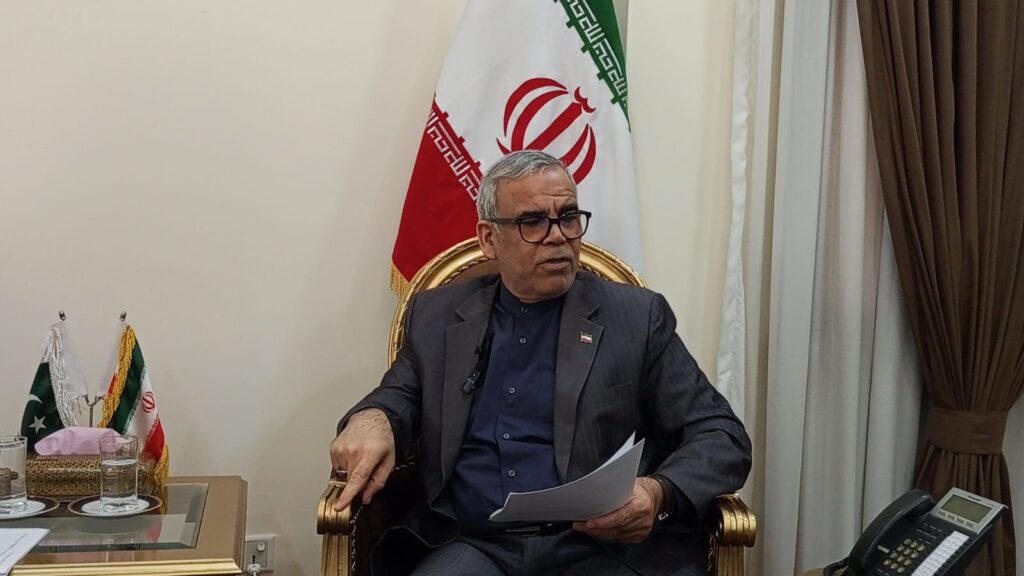
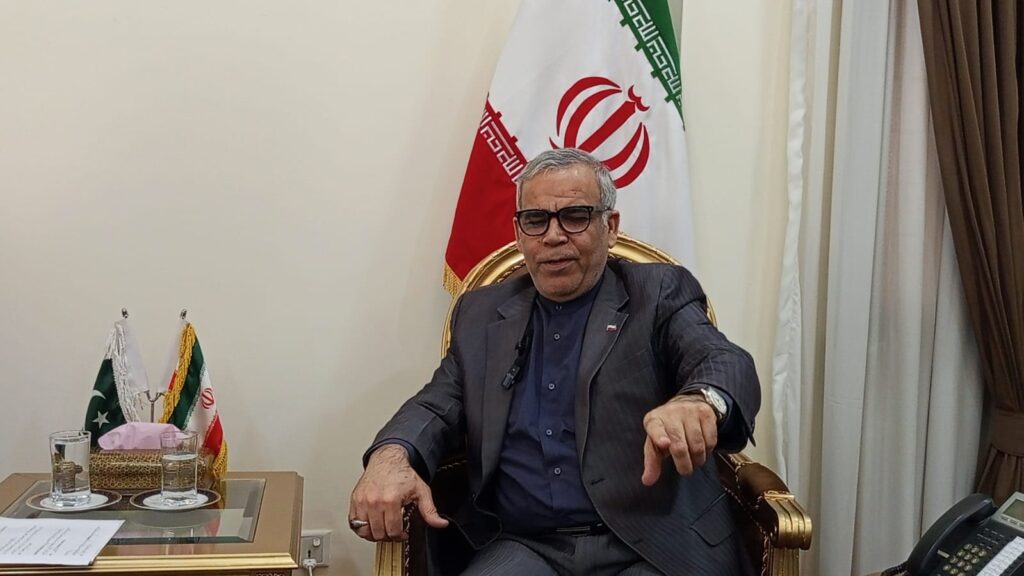
The Full Transcript: Question & Answer (Q&A)
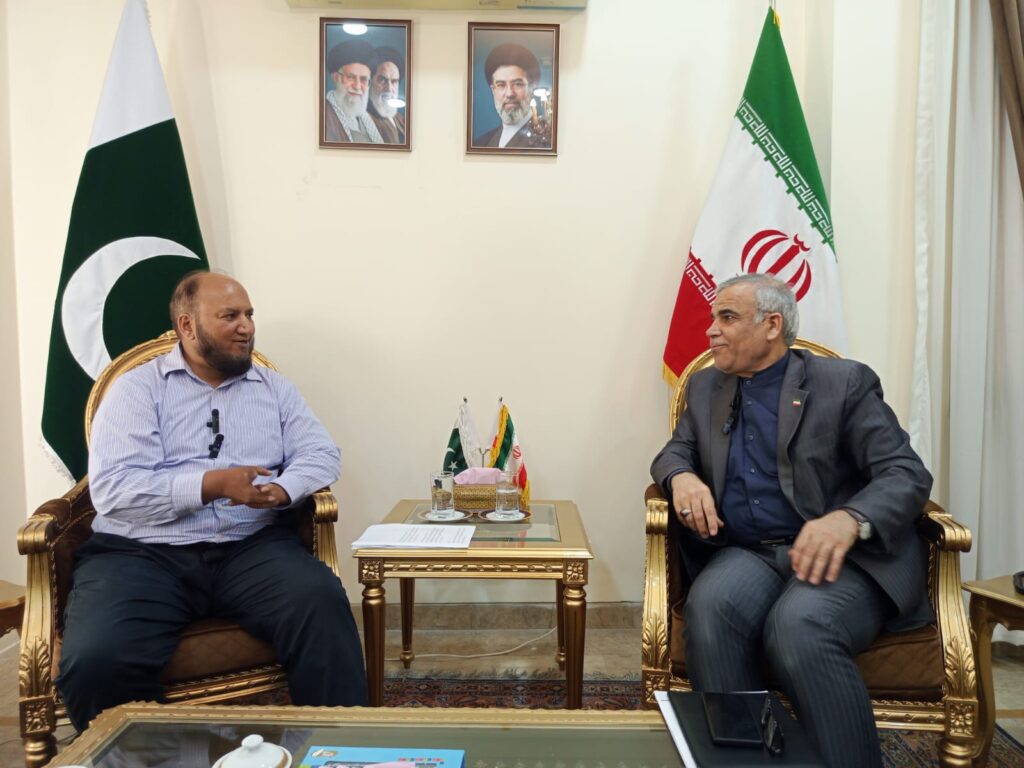
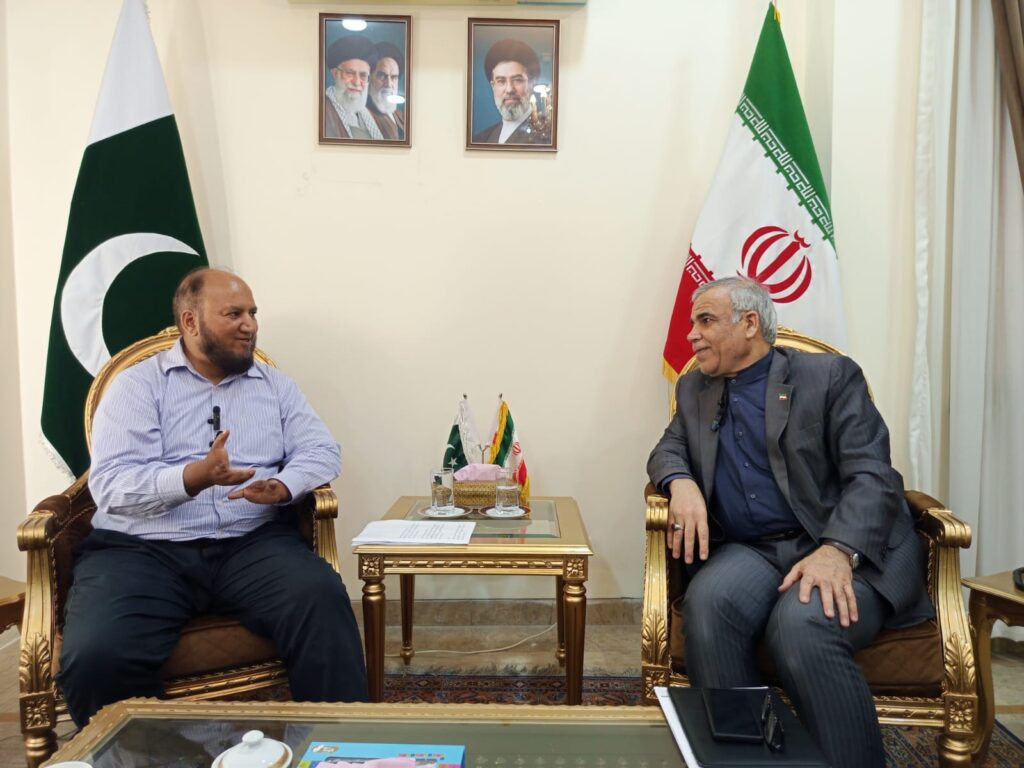
Q: Lahore is known as the cultural heart of Pakistan and shares deep historical ties with Iran. How has your experience been so far as the Consul General in Lahore?
Mehran Movahed Far: I am deeply honored to serve in Lahore, a city globally renowned for its rich history and literature. It is often said that if someone visits Pakistan but misses Lahore, they haven’t truly seen the country. I explicitly invite all international visitors to experience this city. Throughout my tenure, I have never felt like a stranger here. The warmth, kindness, and hospitality of the people are truly heartwarming. Lahore holds immense literary significance. Iranians visiting Pakistan always prioritize paying their respects at the Tomb of Allama Iqbal. Upon my arrival, before formally assuming charge, I also visited Iqbal’s mausoleum out of profound respect. Lahore’s historical legacy stands as a testament to the robust and deeply rooted strength of Iran-Pakistan relations.
Q: What new initiatives is the Iranian Consulate in Lahore pursuing to further strengthen public and cultural ties between Iran and Pakistan?
Mehran Movahed Far: The cultural bonds between our nations are ancient, with the Persian language serving as the primary bridge connecting our two peoples. We must consistently strive to enhance mutual familiarity. Last year, on Iqbal Day, we hosted a musical delegation from Iran that performed Iqbal’s poetry at Alhamra. We need to capitalize on such avenues to provide maximum cultural access to both publics.
More Read
Cinematic collaboration is another promising front; both nations are keen to co-produce a film on Allama Iqbal. Tourism remains highly active, and our consulate processes visa requests daily for Pakistanis wishing to visit Iran. We were very eager to celebrate “Nowruz” alongside the Pakistani public, but the festivities were halted due to the ongoing conflict and the martyrdom of the Supreme Leader. In sports, our cooperation is firmly established—it is designated that Iran’s cricket coach will be Pakistani, while Pakistan’s taekwondo coach is Iranian. We also have active exchange programs for indoor sports, wrestling, and kabaddi, which are highly popular in Iran. There are countless cultural avenues that can continue to play a pivotal role between us.
Q: How do you view the media industries of both countries? Can ‘Media Exchange Programs’ between journalists eliminate misconceptions and ensure accurate reporting? What efforts are underway in this regard?
Mehran Movahed Far: Our relationship with the Pakistani media is excellent. During our late President’s visit to Pakistan last year, a Memorandum of Understanding (MoU) was signed to boost bilateral media cooperation. Personally, I maintain stellar ties with Pakistani journalists. Frankly speaking, Pakistani journalists are incredibly discerning and intellectually astute; whenever anti-Iran rhetoric surfaced, direct dialogue easily cleared the air. Iran maintains media representatives in Pakistan, and Pakistan should similarly expand its media footprint within Iran. During the funeral of our martyred Supreme Leader, Pakistani journalists traveled to Iran to cover the event. The media houses of both nations should rely directly on each other for news. If we want to know about Iran, we should trust Iranian sources, and if Iran needs news about Pakistan, we should not rely on Western agencies like Reuters, which distort facts. This very interview we are conducting today serves that exact purpose—allowing us to understand each other better.
Q: Are there any new agreements or scholarship programs under consideration between the educational institutions and think tanks of both countries for research and academic exchange?
Mehran Movahed Far: Our diplomatic colleagues in Islamabad remain in continuous contact with Pakistani think tanks. However, there is certainly a strategic need to further expand and accelerate these academic linkages.
Q: Broad opportunities exist to expand trade between Pakistan and Iran. The Pakistani public strongly desires to meet its gas and oil needs from Iran, yet the Pak-Iran Gas Pipeline project has long been overshadowed by U.S. sanctions. Under current circumstances, what is the future of this project, and when can the bilateral trade target of $5 billion be achieved?
Mehran Movahed Far: We view this as a highly viable and critical project. The gas pipeline is essential for Pakistan to overcome its severe energy crisis, which impacts the public during both summers and winters. It represents a highly positive dimension of bilateral relations and offers immense economic savings for Pakistan. Even the spokesperson for the Pakistani Ministry of Foreign Affairs stated that this pipeline is a symbol of friendship between our two nations.
Since the agreement was signed in 2009, Iran completed the construction of the pipeline on its side. Pakistan has a remaining 81-kilometer stretch to lay down. Iran ranks foremost globally in petroleum products and holds the second-largest gas reserves. We must protect this symbol of friendship. The U.S. government is acting with absolute coercion, denying the Pakistani public the right to benefit from this infrastructure. The Iranian Ambassador in Islamabad is working closely with Pakistani authorities to find a diplomatic way forward. We believe that Chief of Army Staff General Asim Munir, who also holds good relations with the United States, can navigate a path that allows the people of Pakistan to finally benefit from this project.
Q: Relations between India and Pakistan have historically been strained, with both nations viewing each other as adversaries. On the other hand, India and Iran share good relations. If forced to choose at a critical diplomatic juncture, would Iran prioritize its relations with Pakistan or India?

Mehran Movahed Far: In diplomacy, there are no permanent friends or permanent enemies. Our foreign policy with any nation is entirely independent and never influenced by a third party. Our ties with Pakistan run exceptionally deep compared to many others. Recently, the flags held by our public were those of Pakistan, Lebanon, and Spain. Over the last three years, three presidential visits took place; the martyred Seyed Ebrahim Raisi visited once, and Dr. Masoud Pezeshkian visited twice in a single year. Crucially, whenever these leaders arrived in Pakistan, their very first stop was Lahore to pay homage at the Tomb of Allama Iqbal. Pakistan itself values its diplomatic equilibrium with all nations. Let me pose a rhetorical question: Does Saudi Arabia share greater trade volumes with Pakistan or India? Obviously, Saudi Arabia’s commercial trade is exponentially higher with India, yet Pakistan and Saudi Arabia share profound defense treaties. Commercial volume alone does not dictate the quality of strategic ties. The cultural and historical roots between Pakistan and Iran are so deeply entrenched that no global power can shake them.
Q: China established Gwadar Port in partnership with Pakistan under CPEC. Simultaneously, Iran launched the Chabahar Port project alongside India and the UAE. A perception exists that Chabahar was designed to counter Gwadar. What is the ground reality, and will Chabahar be completed given the current diplomatic friction with the UAE?
Mehran Movahed Far: I will clarify this through two fundamental points. First, Chabahar and Gwadar are not rivals; they are sister ports. Second, Pakistan is fully utilizing the capacity of Gwadar Port for its benefit. Both ports serve as vital conduits to connect the region. Extensive opportunities for synergy exist between them—particularly in logistics, forensics, and port services, which complement one another. These ports bridge the markets of Pakistan, China, Central Asia, and Europe. Closer cooperation will drastically reduce logistics costs and transit times. It will also solidify rail connections and guarantee the security of regional energy pipelines. This transit corridor can turn the region into a booming energy, maritime tourism, and petrochemical hub. Instead of fixating on which contractor manages the ports, we must focus on the macro-opportunities they offer. The geographic potential for cooperation between Chabahar and Gwadar is permanent; ignoring it would result in a mutual loss for both nations.
Q: The eyes of the world are currently on the Middle East. Following escalations in Gaza and Lebanon, attention is fixed on the Strait of Hormuz. Iran insists on regulating cargo transit, while the U.S. demands unconditional access, turning the strait into a geopolitical flashpoint that destabilizes global markets. Donald Trump also proposed—and then rescinded—a 20% cargo tax. What is Iran’s definitive stance on this situation?
Mehran Movahed Far: For decades, Iran provided free maritime regulation and oversight in the Strait of Hormuz without imposing any transit tariffs. However, ensuring environmental safety, managing vessel traffic, maintaining cleanliness, and guaranteeing security incur massive operational costs. Iran now collects nominal fees from passing ships solely to reinvest those funds directly back into the upkeep and safety of the Strait. Unlike former U.S. President Trump, we did not declare this the “Trump Strait.” Trump threatened a unilateral 20% cargo tax on vessels passing through the strait, whereas our Foreign Minister, Abbas Araghchi, responded that Iran is inherently fair and will only collect minimal, justifiable administrative fees.
Furthermore, I disagree with your premise that when the U.S. attacks Iran, Iran retaliates arbitrarily across the region. Iran precisely targets only those specific locations from which we are actively fired upon. Arab states have no right to offer their sovereign territory as staging grounds for American aggression against Iran. They must recognize that they bear accountability if attacks originate from their soil. The reality is that these Arab governments exercise zero sovereignty over U.S. military bases within their borders; they cannot even enter them. Our neighbors must realize that if their territory is used against Iran, they will face the consequences. Iran is not obstructing lawful global trade; we are strictly securing the maritime corridor.
Q: A major portion of the maritime trade route in the Strait of Hormuz passes through Omani waters. If a vessel transits via Oman’s jurisdiction, does Iran still maintain the right to intervene or take military action?
Mehran Movahed Far: During an active state of war, standard peacetime maritime boundaries are overridden by national security imperatives. U.S. and Israeli forces consistently utilize these routes to directly challenge our national sovereignty. War dictates its own strict legal frameworks, and we will take every necessary security measure to safeguard our nation. We maintain close diplomatic communication with Oman to establish an organized regulatory framework. However, as long as active threats exist, vessels must strictly adhere to the secure maritime corridors designated by Iran.
Q: Pakistan and Qatar played a very important role in the negotiations and agreement between Iran and the US, which was signed by both countries as guarantors and an initial agreement for 60 days was also reached, but it ended after a few days. Who was the reason for the end of this agreement? Did the Iranian Revolutionary Guards break this agreement, did the US or Israel violate it? Should Pakistan and Qatar be part of this process again ?
Mehran Movahed Far: Pakistan played a magnificent, historic role in facilitating this ceasefire, and we express our deep gratitude. However, it was clear to us from day one that the U.S. would not honor its signatures. Historically, during two previous rounds of dialogue, they launched military strikes against us mid-negotiation. The Americans simply do not respect treaties. Within the first 30 days of the 60-day truce, the U.S. committed multiple direct violations, while Iran perfectly adhered to every single clause of the signed framework. The U.S. reneged simply because it realized it was losing ground strategically. It is deeply regrettable that they sabotaged Pakistan’s diplomatic endeavors. Now, the entire world sees them targeting Iranian cities, bombing children’s hospitals, and destroying water infrastructure. They do not believe in peace.
Q: Following the martyrdom of the Supreme Leader and top military commanders, the Iranian public expressed immense grief and anger, chanting slogans calling for direct retribution and vengeance against Donald Trump. Concurrently, Iran engages in diplomatic talks. How does the government reconcile this public anger with ongoing diplomacy?
Mehran Movahed Far: Avenging the martyrdom of our Supreme Leader is an inalienable right of the Iranian people. The Americans crossed our red lines, and consequently, we will cross theirs. This is a non-negotiable public demand. Under international law, these assassinations constitute blatant war crimes, and the perpetrators must face justice. Our public will never abandon this demand, and it exists entirely separate from routine diplomatic engagements. Our conflict with the U.S. is not driven by primitive revenge; it is an existential battle for national survival and self-defense. Avenging our martyrs remains an integral pillar of our national movement.
Q: You spoke of pursuing legal actions and trials against Donald Trump and other actors. Realistically, they will not travel to Iran to face your courts. Will Iran approach the International Court of Justice (ICJ), and does Iran truly trust these international legal bodies?
Mehran Movahed Far: It is the duty of our judiciary to compile the evidence and approach international legal forums. Iran is a responsible nation that fully recognizes and abides by international law. If other global powers choose to violate international law, that reflects their lawlessness. However, the Iranian government cannot and will not ignore its public’s demands. Our Leader of the Revolution explicitly stated that those guilty of these war crimes will not escape to die a natural death; they will not carry peace to their graves. It is the collective responsibility of all free legal entities worldwide to work towards this accountability.
Q: A narrative exists globally that Israel seeks to establish ‘Greater Israel’ to dominate the Middle East. Conversely, critics argue that Iran uses its ‘Axis of Resistance’ to establish hegemony over Arab states. How do you respond to this accusation?
Mehran Movahed Far: This comparison is incredibly cruel and factually inaccurate. The undeniable reality is that Israel has officially published a map of “Greater Israel,” openly claiming the sovereign territories of its neighbors, including Lebanon, Syria, Egypt, Iraq, and Saudi Arabia. They respect no international borders. Has Iran ever printed a map expanding its borders? Has Iran invaded its neighbors? Israel stands as the sole expansionist power, and Iran is the lone strategic barrier protecting the region from this grand design. We are effectively fighting to defend the sovereignty of the Arab world, ironical as it is that Israeli forces are utilizing the airspaces of some of these very nations to strike us. The only way to end this regional conflict permanently is the complete withdrawal of U.S. military forces from the Persian Gulf.
Q: Iran is frequently accused of interfering in the internal affairs of Yemen, Iraq, and Syria by providing direct support to Hezbollah in Lebanon and the Houthi movement in Yemen. How does Tehran justify these relationships?
Mehran Movahed Far: Both Hezbollah and the Houthi movement are entirely independent, sovereign political entities within their respective nations. Based on our foreign policy principle of maintaining good relations with regional actors, we share strong ties with them. No political unit takes operational commands from Tehran. Our goal is regional stability. As our martyred Leader pointed out, the only foreign proxy operating destructively in this region is Israel, which acts as a proxy for Western imperial interests.
Q: Following Chinese mediation, diplomatic ties between Iran and Saudi Arabia were restored. What practical, positive shifts have occurred in Iran’s relations with the broader Arab world since this breakthrough?
Mehran Movahed Far: Even now, with the conflict at its absolute peak, our Foreign Minister, Abbas Araghchi, maintains continuous, direct communication with his counterparts in Saudi Arabia, Qatar, and other Gulf states. Saudi Arabia is a major regional power, and we genuinely desire deep, constructive ties with Riyadh. The combined economic and strategic capacity of Iran and Saudi Arabia can serve as a massive catalyst for the prosperity of the entire region.
Q: Given global blocs like the European Union, does Iran believe Islamic nations should form a cohesive alliance to counter foreign aggression? Which country or leader possesses the credibility to forge this Islamic unity?
Mehran Movahed Far: Reestablishing a unified Islamic bloc was the profound dream of Allama Iqbal. Theoretically, that bloc exists today in the form of the Organization of Islamic Cooperation (OIC). Regrettably, however, it remains deeply fragmented due to political divisions deliberately sowed by American and Israeli machinations to prevent Muslim unity.
Q: This conflict has claimed the lives of Iran’s top military brass and numerous civilians, alongside widespread infrastructure damage. What has Iran lost and gained? What is the official toll of casualties and infrastructure damage?
Mehran Movahed Far: Our greatest assets were our Supreme Leader, our military commanders, and our citizens. The loss of 168 innocent students at the Minab school is devastating; the life of a single one of those children is worth infinitely more than the entire apparatus of the aggressive forces. Over the course of this 40-day conflict, our nation faced relentless bombardment: 123,000 homes were hit, 30 hospitals targeted, 1,200 schools damaged, 8 vital railway lines disrupted, 30 villages struck, and critical water infrastructure heavily damaged, leaving over 40,000 citizens facing severe water shortages. Additionally, 30 universities and 55 libraries sustained significant damage. The U.S. is systematically attempting to dismantle Iran’s civilian infrastructure—a lawless tactic they have historically used against cultural heritage sites globally. Donald Trump repeatedly threatens to obliterate our national infrastructure. In response, our military command has formally declared that if our national infrastructure is targeted further, Iran will retaliate by striking strategic infrastructure across the region.
Q: What data does Tehran possess regarding the economic and military losses sustained by U.S. and Israeli forces during this confrontation?
Mehran Movahed Far: I do not possess the precise casualty figures or finalized fiscal datasets for their losses, but we are absolutely certain that their damages are immense. The figures I provided regarding Iran’s internal losses are thoroughly documented and serve as official evidence of U.S.-Israeli war crimes, which our media has broadcast globally. Iranian forces strictly target only verified military, political, and command complexes. We never attack schools, universities, or hospitals, which is why Washington and Tel Aviv cannot produce any verified imagery of civilian targeting by Iran.
Q: Given the economic strain of the war and Donald Trump’s rhetoric indicating a prolonged conflict, what is Tehran’s long-term capacity to sustain resistance?
Mehran Movahed Far: Iran is a geographically vast nation with massive natural resources. We are not solely dependent on the Strait of Hormuz, nor are our trade networks limited to the southern maritime routes; our borders connect us robustly to the East and the West. Our domestic agricultural sector produces seven times more food than our total population requires. We possess immense resilience to sustain a long-term conflict. Our armed forces have spent decades preparing precisely for this existential contingency. We are entirely undeterred. We are defending our sovereign soil against foreign aggression, which would never have breached this region had it not been for the complicity of certain regional actors.
Q: What is Iran’s definitive formula for permanent peace in the Middle East? Does Tehran endorse a Two-State Solution?
Mehran Movahed Far: We absolutely reject the Two-State Solution. Iran has proposed a comprehensive four-stage democratic formula to resolve the Palestinian issue, centered entirely on a nationwide, inclusive referendum allowing the indigenous population to determine their own destiny. Furthermore, the Israelis themselves do not genuinely accept or respect a two-state framework.
Q: Rumors have actively circulated in international media claiming that Ayatollah Seyed Mojtaba Khamenei was severely injured, citing his absence from recent high-profile state funerals. Donald Trump publicly claimed his health is 90% compromised. What is the ground truth regarding his well-being?
Aghai Mehran Movahed Far: He is in perfect health, and Donald Trump’s assertions are completely fabricated lies. Our national security agencies have strictly advised him to temporarily limit his public appearances due to high-level security protocols. As soon as the current threat matrix normalizes, he will resume his public engagements.