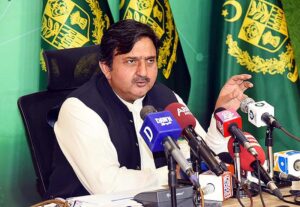


ISLAMABAD, Pakistan’s Interior Minister Mohsin Naqvi has said the country’s existing governance system has lost its effectiveness and warned that without fundamental reforms, Pakistan will continue facing the same challenges for years to come.
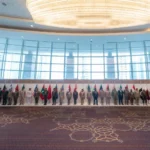
Addressing the First Pakistan Economic Summit in Islamabad, Naqvi said the current government intends to complete its constitutional term while emphasizing that the country urgently needs administrative restructuring, political consensus, and institutional reforms to ensure sustainable development.
Although he generally avoids political speeches, Naqvi said the current situation required an honest assessment of Pakistan’s governance challenges.
Representatives from all four provinces—Punjab, Sindh, Khyber Pakhtunkhwa, and Balochistan—have highlighted their respective issues, he noted, adding that the responsibility for the country’s present condition lies with all stakeholders.
Drawing on his three-and-a-half years in politics, Naqvi said that unless structural reforms are introduced, Pakistan would still be debating the same problems a decade from now.
“Whether people accept it or not, the system we are living under has effectively collapsed. The day we collectively decide to fix it will be the day meaningful reforms begin,” he said.
Naqvi reiterated his support for democracy but argued that democratic systems can take different administrative forms, and Pakistan must adopt a governance model that better addresses the needs of its citizens.
He stressed that ordinary Pakistanis are seeking justice, employment, education, and efficient public services, but the current administrative framework has failed to deliver these essentials. He noted that many citizens still have to travel long distances for routine legal and administrative matters.
The Interior Minister also called for the creation of new administrative units, saying that regardless of whether they are designated as provinces or given another title, decentralization is essential for improving governance and public service delivery.
He added that providing laptops, tablets, or financial incentives alone would not satisfy Pakistan’s youth, who instead demand transparency, merit-based employment, and equal opportunities.
Naqvi urged all political parties to engage in dialogue on administrative reforms and national issues. He said that, in his personal view, Pakistan Tehreek-e-Insaf (PTI) and all other political forces should be included in the national reform process.
Speaking informally with journalists after the summit, Naqvi dismissed speculation that he might become Pakistan’s foreign minister.
“I will remain the Interior Minister. I am not becoming the Foreign Minister,” he said.
He also stated that Field Marshal Syed Asim Munir had repeatedly made it clear that Pakistan’s democratic system would not be derailed. While acknowledging improvements in Pakistan’s international relations, Naqvi said meaningful progress would only be possible if domestic governance reforms were implemented.
During the summit, United Business Group Chairman SM Tanveer said Pakistan’s exports could increase from $100 billion to $200 billion if the business community were provided with a more favorable investment climate. He emphasized the importance of policy continuity, investor confidence, and comprehensive economic reforms to drive long-term economic growth.