

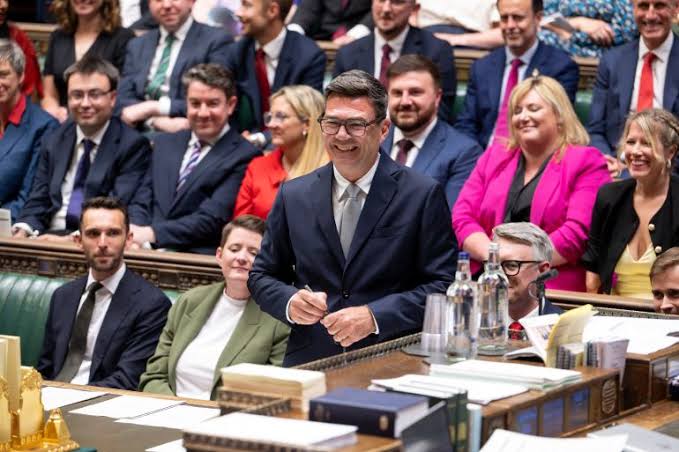
London: Andy Burnham has officially assumed office as the Prime Minister of the United Kingdom after being invited by King Charles III to form a new government. Delivering his first address outside 10 Downing Street, Burnham described his administration as a “turning point” for Britain and pledged immediate action to ease the country’s cost-of-living crisis.
The newly appointed prime minister announced that his government would begin introducing emergency relief measures from Tuesday to reduce financial pressure on households. The package will focus on lowering energy bills, bus fares, and other essential living costs affecting millions of people across the country.
Burnham also revealed plans to present a comprehensive 10-year national strategy later this year aimed at reshaping Britain’s political and economic future. He said the long-term plan would focus on improving public services, strengthening the economy, and delivering sustainable growth.
Addressing broader domestic priorities, Burnham pledged to tackle homelessness, accelerate the construction of new council housing, and transfer greater decision-making powers to local authorities. He emphasized that politics should once again become a genuine public service dedicated to improving people’s daily lives.
Earlier in the day, Burnham formally accepted the office of prime minister following an audience with King Charles III at Buckingham Palace, succeeding Keir Starmer, who resigned after serving as prime minister. Burnham becomes the latest British leader during a decade marked by significant political transitions.
More Read

The new prime minister is expected to begin appointing members of his cabinet immediately, with the government’s first priority centered on providing economic relief to families struggling with inflation and rising household expenses.
Before submitting his resignation to the King, former Prime Minister Keir Starmer delivered a farewell speech, stating that he was leaving office with Britain in a stronger position. He highlighted economic improvements, reduced immigration levels, and his party’s electoral achievements while expressing full support for Burnham’s leadership.
Political reactions quickly followed the transition. Conservative Party leader Kemi Badenoch congratulated Burnham but warned against any future tax increases. The Liberal Democrats indicated their willingness to cooperate on social care reforms, while Reform UK renewed its call for an immediate general election.
More Read

The leadership change marks a significant moment in British politics as the new government prepares to implement policies aimed at addressing inflation, public services, and long-term economic stability.