

Pakistan has reaffirmed its commitment to diplomatic efforts aimed at resolving tensions between the United States and Iran.
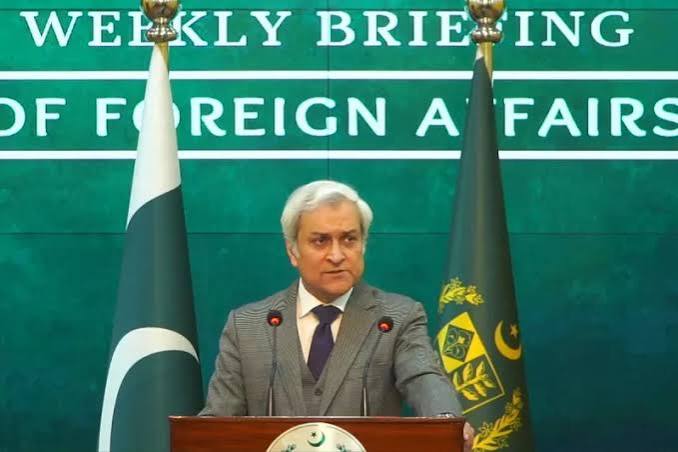
Foreign Office spokesperson Tahir Hussain Andrabi said Islamabad does not consider the Islamabad Memorandum of Understanding (MoU) dead or ineffective.
He said the peace framework remains in place. Pakistan also remains hopeful that Washington and Tehran will eventually return to negotiations.
Andrabi made the remarks during his weekly media briefing in Islamabad on Wednesday. He said the recent escalation was concerning and undesirable, but Pakistan had not lost hope in the peace process.
Islamabad Rejects Failure of Mediation Efforts
The spokesperson rejected the suggestion that the latest US-Iran escalation represented a failure of Pakistan’s diplomatic efforts.
More Read

He said Pakistan remains sincerely engaged in efforts to help resolve the dispute through dialogue and diplomacy.
Andrabi also pointed to recent diplomatic contacts as part of the wider effort to reduce tensions. He said Pakistan continues to work with friendly countries to encourage a return to negotiations.
Pakistan has previously said that the Islamabad MoU and the Pakistan-Qatar joint statement provide an important framework for de-escalation and renewed talks between Washington and Tehran.
More Read

Pakistan Rejects India’s Position on Indus Waters Treaty
The Foreign Office spokesperson also addressed India’s rejection of an arbitration ruling concerning the Indus Waters Treaty (IWT).
Andrabi said India’s rejection of the decision cannot end its obligations under the treaty.
He said the Permanent Court of Arbitration at The Hague reaffirmed on September 1 that the treaty remains in force and binding. He added that India’s unilateral attempt to place the agreement in abeyance does not remove its treaty obligations.
Pakistan has called on India to return to full implementation of the Indus Waters Treaty.
Pakistan Warns of Wider Implications
Andrabi said India’s approach could set a negative example for other regions where countries manage shared resources through legally binding agreements.
He stressed the importance of respecting international law and established dispute-resolution mechanisms.
More Read

Pakistan has consistently maintained that disputes over shared water resources should remain within the legal framework established by the Indus Waters Treaty.
Diplomacy Remains Pakistan’s Preferred Path
The Foreign Office said Pakistan will continue supporting dialogue as the preferred means of resolving international disputes.
Despite renewed US-Iran tensions, Islamabad says it remains committed to diplomatic engagement.
Pakistan hopes the existing peace framework can help create conditions for Washington and Tehran to resume negotiations and work toward a lasting settlement.