

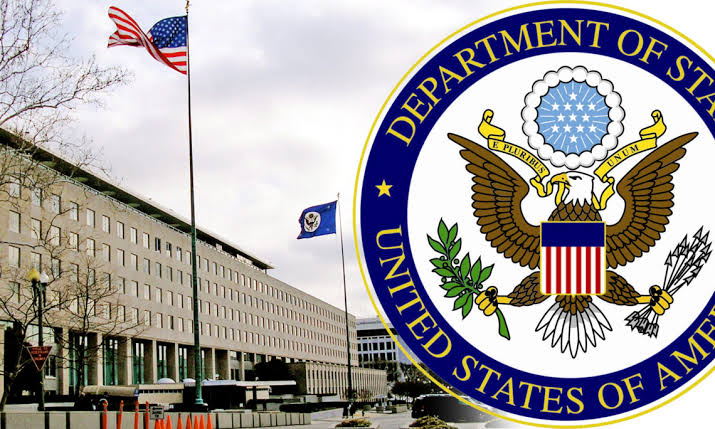
WASHINGTON, — The United States Department of State has informed Congress of plans to close five diplomatic missions overseas in what would be one of the most significant reductions of America’s diplomatic footprint in recent years, according to people familiar with the matter.
The proposed closures include diplomatic posts in Winnipeg (Canada), Nagoya (Japan), Medan (Indonesia), Douala (Cameroon) and the U.S. Embassy in St. George’s, Grenada.
According to sources familiar with the congressional notification, the move represents an uncommon effort to reduce multiple overseas diplomatic facilities outside the context of a specific geopolitical crisis. The individuals spoke on condition of anonymity because the notification has not been made public.
The planned closures are part of a broader review of U.S. diplomatic operations aimed at improving efficiency and reducing operating costs while aligning America’s overseas presence with evolving foreign policy priorities.
The initiative follows earlier discussions within the Trump administration regarding a wider restructuring of the State Department. During the early months of the administration, officials considered closing nearly a dozen diplomatic missions abroad, while the White House Office of Management and Budget reportedly advocated for an even more extensive reduction involving as many as 30 overseas posts.
Although the State Department underwent a major organizational restructuring last year—eliminating numerous bureaus and reducing hundreds of positions—no foreign missions were ultimately closed at that time.
Responding to media inquiries, the State Department neither confirmed nor denied the reported closures but emphasized that it continues to evaluate its global diplomatic network.
“The Department remains focused on ensuring that America’s diplomatic footprint is efficient, effective and aligned with U.S. national interests while following all required congressional notification procedures,” a State Department statement said.
More Read
Secretary of State Marco Rubio has repeatedly argued that reforms are necessary to modernize the department and ensure taxpayer resources are used efficiently. Administration officials have maintained that some smaller diplomatic posts no longer provide sufficient strategic value relative to their operating costs.
Critics, however, warn that shrinking America’s diplomatic presence could weaken U.S. influence abroad.
Several Democratic lawmakers and former national security officials have argued that reductions in diplomatic missions, combined with the dismantling of the U.S. Agency for International Development (USAID), could create opportunities for geopolitical rivals such as China and Russia to expand their influence in strategically important regions.
Among the missions identified for closure, the U.S. Embassy in St. George’s, Grenada, would be the only embassy affected. The facilities in Winnipeg, Nagoya, and Medan operate as consulates, while the office in Douala functions as an embassy branch office. Such missions typically provide consular services, support American citizens, facilitate trade, and promote U.S. diplomatic interests outside host countries’ capital cities.
During the previous administration, the United States expanded its diplomatic presence in several Pacific nations as part of broader efforts to strengthen regional engagement amid growing strategic competition with China.
China currently maintains diplomatic representation in Grenada, Nagoya, and Medan, while it does not operate equivalent missions in Winnipeg or Douala.

If implemented, the closures would mark one of the most notable contractions of the U.S. diplomatic network in recent years and could reshape Washington’s engagement strategy in several regions.