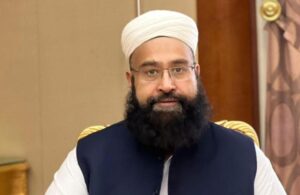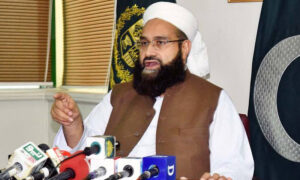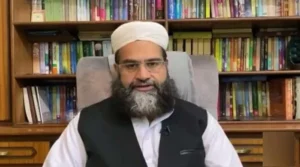



LAHORE, Pakistan Ulema Council Chairman Hafiz Muhammad Tahir Mahmood Ashrafi has reaffirmed support for Saudi Arabia and said Pakistan’s government policy toward the Kingdom has the full backing of religious scholars.
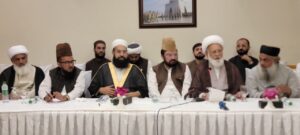
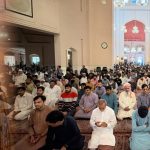
Speaking at a Tazeem-e-Haramain Sharifain seminar in Lahore, Ashrafi said the security and sanctity of Makkah and Madinah were a shared concern for Muslims.
“We express our love for Saudi Arabia and will continue to do so,” he said. He added that the Muslim world stands with Saudi Arabia over the security of the Two Holy Mosques.
Ashrafi Rejects Sectarian Description of Houthi Conflict
Ashrafi said the conflict involving Yemen’s Houthis should not be presented as a Sunni-Shia dispute.
He described it instead as an issue involving terrorism and security. He said the Muslim world had condemned attacks against Saudi Arabia and opposed militant attacks targeting the Kingdom.
“The Houthi issue is not a Shia-Sunni issue but a matter of terrorism,” Ashrafi said, according to remarks at the seminar.
He also said there should be no concessions for groups responsible for attacks.
His comments come amid continued tensions between Saudi Arabia and the Houthis. Pakistani religious scholars recently declared the security of Makkah and Madinah a “red line” and expressed support for Pakistan’s position on Saudi Arabia’s security.
More Read
Claims About Religious Decrees Against Houthis
Ashrafi said opposition to the Houthis was not limited to the Pakistan Ulema Council.
He claimed that scholars, muftis and religious leaders across the Muslim world had issued religious rulings against the group. He specifically referred to the International Islamic Fiqh Academy in Jeddah and other Islamic institutions.
Ashrafi said the academy had declared the Houthis terrorists in 2015. These remarks were part of his broader argument that the conflict should not be framed through sectarian differences.
Recent statements by Ashrafi have also focused on countering extremist narratives and rejecting violence carried out in the name of religion.
Allegations About Houthi and Israeli Intentions
Ashrafi also made allegations about the objectives of the Houthis and Israel.
He claimed that statements by Houthi religious figures and Israeli Prime Minister Benjamin Netanyahu showed similar intentions toward Makkah and Madinah. He further alleged that Houthi attacks and statements regarding regional shipping reflected an alignment of interests.
More Read
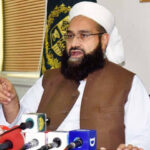
These claims were presented by Ashrafi at the seminar and were not independently established in his remarks.
He also referred to Iran’s recent statements distancing itself from the Houthis and Iraqi militias. Pakistan’s Foreign Minister Ishaq Dar said on October 2 that Iran had suggested political engagement with the Houthis. He said the proposal would be discussed by Saudi Arabia, Türkiye and Pakistan under the Mecca Joint Defence Agreement.
Security of Makkah and Madinah
Ashrafi strongly condemned what he described as attempts by the Houthis to target the Holy Kaaba.
He said any action threatening the security of Makkah or Madinah was unacceptable. He stressed that protecting the Two Holy Mosques remained a matter of collective concern for Muslims.
Ashrafi also defended Saudi Arabia’s military actions in Yemen. He said describing the Saudi role as interference was incorrect because Yemen’s internationally recognised government had requested Saudi assistance.
He reiterated full solidarity with Saudi Arabia and said Muslims remained united over the protection and sanctity of the Two Holy Mosques.