

Analysis by Syed Farand Ali
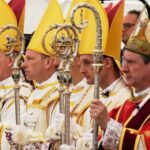
A profound theological and administrative earthquake has struck the heart of the Roman Catholic Church. In the first major crisis of his papacy, Pope Leo XIV is facing a direct rebellion from a traditionalist breakaway faction. The Society of Saint Pius X (SSPX) has defiantly gone ahead with the ordination of four bishops without papal approval. This bold move, executed during a massive ceremony in Écône, Switzerland, threatens to trigger a historic schism within the 1.4-billion-member church, resulting in the automatic excommunication of all those involved.
The Roots of Rebellion: What is the SSPX?
To understand this Vatican crisis, one must look back to 1970, when French Archbishop Marcel Lefebvre founded the Society of Saint Pius X. The group split from mainstream Catholicism over radical objections to the reforms of the Second Vatican Council (Vatican II) in the 1960s.
The “Lefebvrists” staunchly reject modern church teachings on religious freedom, ecumenism (relations with other Christian denominations and religions), and structural updates to Catholic worship. Crucially, they dissent from Vatican II’s explicit condemnation of antisemitism. Believing the modern Catholic Church is in a “state of emergency” due to liberal and “modernist” errors, the SSPX argues that unauthorized ordinations are necessary for the “salvation of souls.”
Defiance in Switzerland: Pope Leo’s Failed Eleventh-Hour Appeal
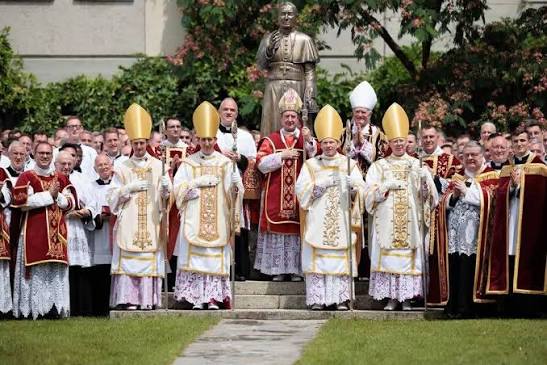
The dramatic climax unfolded on Wednesday in Écône, Switzerland. Under an enormous white marquee, roughly 15,000 traditionalist followers gathered to witness the forbidden rite. The event was globally broadcast via a livestream translated into six languages on the society’s official website. Among the newly consecrated bishops was Father Michael Goldade, the head of an SSPX seminary in Dillwyn, Virginia.
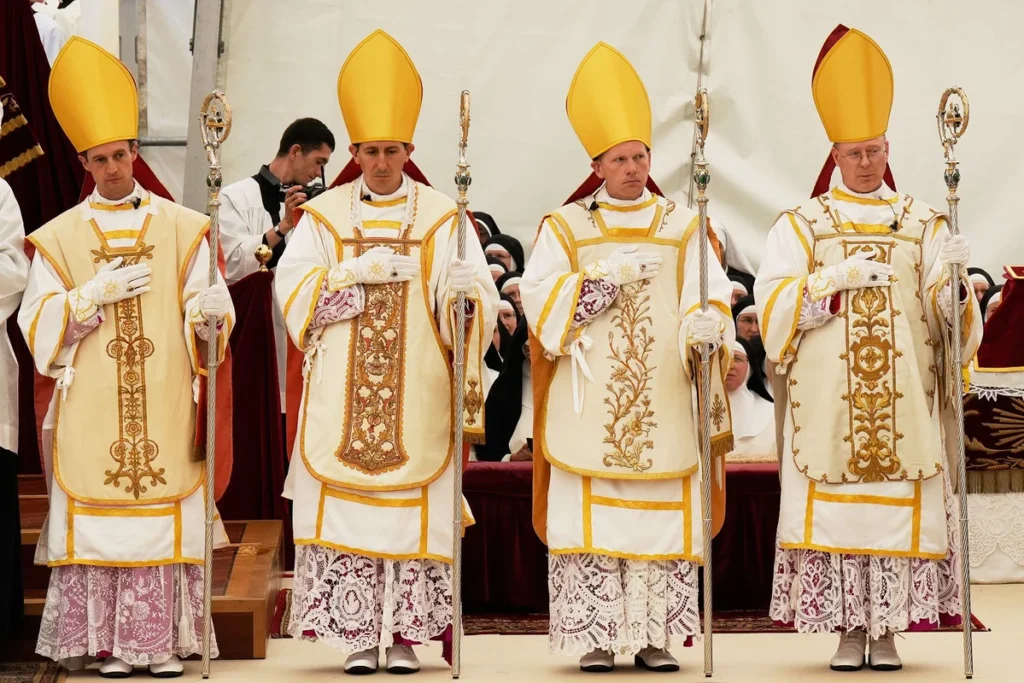
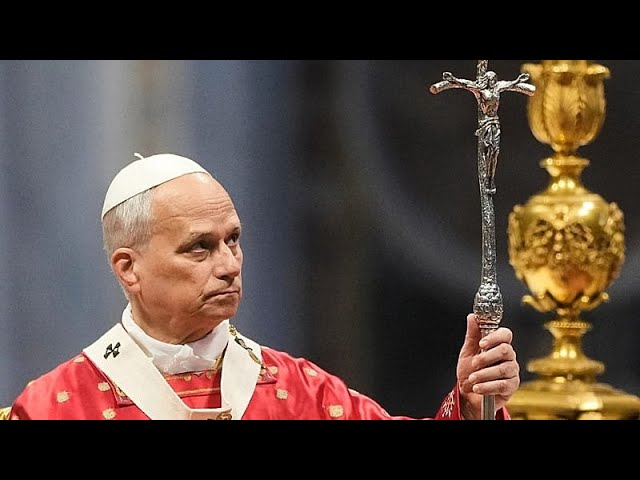
This defiance occurred despite an explicit eleventh-hour intervention by Pope Leo XIV on Monday. The Pontiff had warned the group that proceeding with the consecrations would constitute a “schismatic” act and a “sin of extreme gravity.” However, the traditionalist faction chose to cross the red line, ignoring the papal mandate.
Vatican’s Resolute Response: Automatic Excommunication
In Catholic ecclesiology, the communion between bishops and the Pope is the ultimate cornerstone of church unity. By consecrating bishops without the Pope’s mandate, the SSPX triggered an automatic penalty under canon law: latae sententiae excommunication, which strictly cuts off the individuals from the sacraments of the Church.
Cardinal Pietro Parolin, the Vatican’s Secretary of State, expressed “deep sorrow” over the development.
More Read
“The ordinations break the unity of the Church and incur very specific sanctions—fundamentally, excommunication,” Parolin told reporters, though he added a glimmer of hope: “My hope is that, despite what has happened today, dialogue can resume.”
Meanwhile, close allies of Pope Leo, including Cardinal Blase Cupich of Chicago, warned of a deeper geopolitical danger: the establishment of a “parallel structure within the ecclesial body of the church,” which misuses sacred rites and fractures global Catholic governance.
History Repeating: Holocaust Denial and Commercial Controversies
This is not the first time the SSPX has pushed the Vatican to the brink. In 1988, Archbishop Lefebvre famously ordained four bishops without papal consent, drawing immediate excommunication from Pope John Paul II.
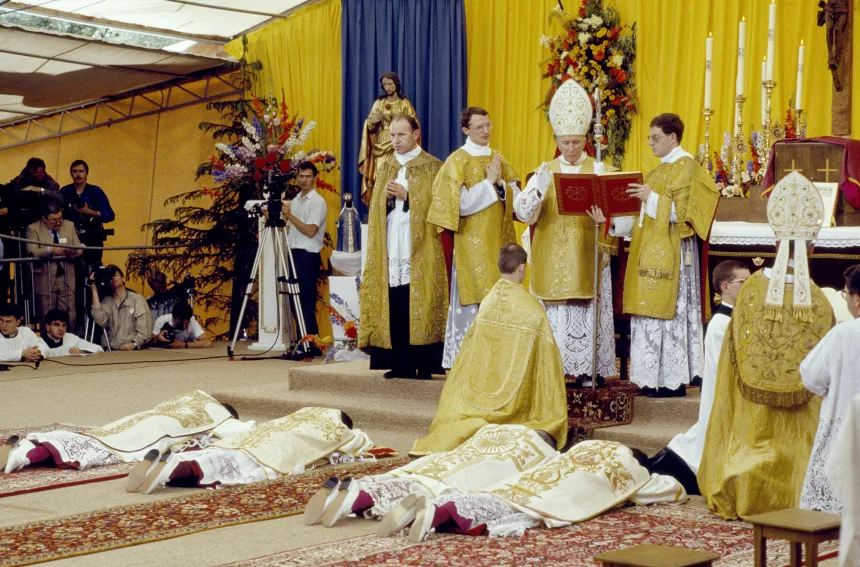
Decades later, in 2009, Pope Benedict XVI lifted those excommunications in a bid for reconciliation. However, that olive branch backfired spectacularly when one of the rehabilitated bishops, Richard Williamson, was exposed as a Holocaust denier who claimed the Nazis did not use gas chambers. Williamson was subsequently prosecuted by a German court and expelled from the SSPX, but the scandal left deep scars on the church’s interfaith relations.
Adding a bizarre layer of commercialism to the latest crisis, the SSPX launched a dedicated website detailing four days of events surrounding the illicit ordinations. Among the promotional materials was a 75 Swiss Franc souvenir box containing four bottles of wine—a move critics view as highly unusual for an event of such grave theological consequence.
The Scale of the Split: Why 1.4 Billion Catholics are Affected
Statistically, the SSPX is a drop in the ocean. The Roman Catholic Church boasts 1.4 billion members and 400,000 priests, while the SSPX commands roughly 600,000 followers and 700 priests worldwide.
Yet, the Vatican is treating this micro-schism with absolute seriousness. The danger lies not in the numbers, but in the precedent. If traditionalist pockets across Europe and the United States continue to align with a parallel, unrecognized hierarchy, it threatens the central authority of the papacy in a highly polarized modern world.
More Read
Pope Leo XIV, who has championed global church unity since his election, now faces his defining trial. Prior to the event, the Pope signaled that while he favors dialogue, he recognizes the limits of diplomacy. “If they make that choice, I am sorry, but we must move forward,” he stated. With the rebel faction having made their choice, the world now watches how the Vatican will navigate this fractured modern landscape.